
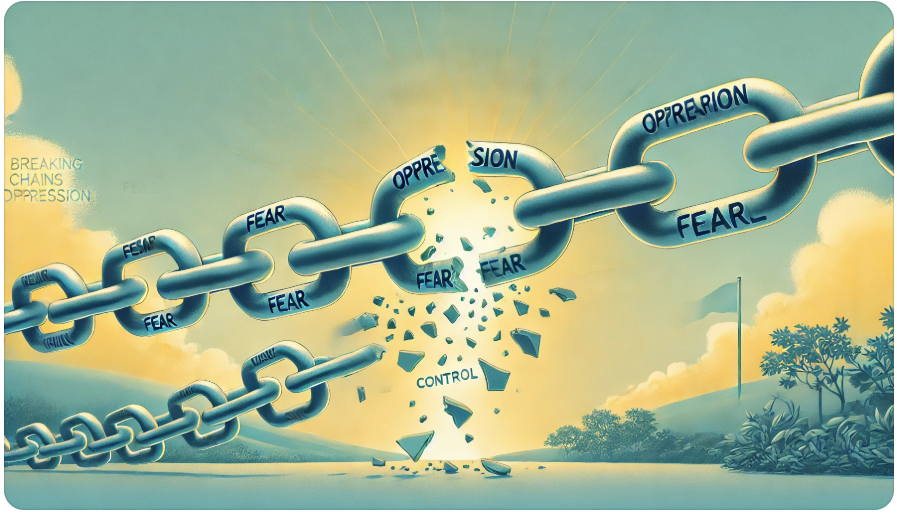

This draft was inspired by Valerii Pekar’s Facebook post, which reflects on the fall of dictatorships, their impact on societies, and the opportunities for renewal that arise in their wake. The post examines the inherent brutality of dictatorial regimes, using the example of Bashar al-Assad’s Syria to highlight the human cost of such systems and the potential for transformation following their collapse.
As with previous drafts, this document is part of a larger effort to critically analyze political ideologies and their impact on power structures, with the ultimate goal of integrating these insights into curriculum content for social work and social development. While the ideas presented here aim to connect historical patterns with contemporary challenges, extensive verification and referencing are essential.
Future iterations will focus on substantiating claims through primary sources and expert analyses, ensuring a comprehensive and balanced understanding of the complex dynamics at play in the fall of dictatorships.
Introduction
Dictatorships have long been synonymous with oppression, violence, and the suppression of human potential. Rooted in the belief that people are incapable of governing themselves, dictatorships offer a singular path dictated by those in power, often at the cost of freedom, human rights, and societal progress. While some argue that dictatorships bring stability, this claim often masks a deeper truth: stability under dictatorship is limited to those in power, maintained through violence and fear, while the majority suffer under the weight of oppression.
Drawing inspiration from Valerii Pekar’s incisive reflections on the fall of Bashar al-Assad’s regime in Syria, this article explores why the death or departure of dictators is critical for societal transformation. Though the collapse of dictatorships may sometimes lead to chaos or even pave the way for new forms of authoritarianism, the opportunity for freedom and hope they create is inherently better than the guaranteed oppression of a dictatorial regime.
The Myth of Stability Under Dictatorships
Dictatorships often present themselves as the guardians of stability. In reality, this “stability” is a façade that hides systemic violence, economic stagnation, and the suppression of human dignity. The example of Bashar al-Assad’s regime in Syria illustrates the inherent instability and human cost of dictatorship:
- Mass Atrocities: Assad’s regime committed mass killings, bombarded cities, used chemical weapons, and engaged in widespread torture and extrajudicial executions. Hundreds of thousands died, and millions were displaced.
- Humanitarian Crises: Deliberate actions by the regime created artificial famines, destroyed hospitals, and targeted civilian infrastructure, leading to dire humanitarian conditions.
- Selective Stability: The regime’s “stability” served only the ruling elite and its loyalists, while the broader population lived in fear and deprivation.
This pattern is consistent across many dictatorships, where the appearance of order masks the chaos inflicted on the majority.
Why the Fall of Dictators Is Necessary
- Ending the Cycle of Oppression
Dictatorship thrives on the belief that people are incapable of self-governance. By overthrowing a dictator, citizens demonstrate their capacity to take responsibility for their own futures. While the transition may be challenging, it offers a chance to break free from the cycle of oppression.- Historical Examples: The fall of Adolf Hitler in Germany, Benito Mussolini in Italy, and Francisco Franco in Spain each paved the way for democratic reforms and societal rebuilding.
- Opening Pathways for Change
A dictatorship offers only one path—the will of the dictator. Its fall creates multiple pathways for societies to explore, even if some lead to temporary setbacks.- Soviet Union: The collapse of the USSR allowed many countries to choose democratic governance or hybrid systems, each more humane than the Soviet regime.
- Iraq’s Kurdistan Region: Following the fall of Saddam Hussein, Iraqi Kurdistan pursued its path toward modern statehood.
- Opportunities Outweigh Risks
Even if transitions from dictatorship lead to challenges or new authoritarian regimes, they provide hope for eventual progress. Freedom, even in its embryonic stage, is always preferable to guaranteed oppression.- Freedom Over Guaranteed Subjugation: As Pekar notes, “Any chance at freedom is better than guaranteed unfreedom.” The fall of a dictatorship offers a chance, however slim, for societal growth.
The Challenges of Post-Dictatorship Societies
While the fall of a dictator is a cause for celebration, the aftermath often brings significant challenges.
- Power Vacuums and Chaos
The collapse of centralized control can lead to factionalism and conflict, as seen in Libya and Iraq. Competing groups may vie for power, leading to instability and violence. - Legacy of the Regime
Even after a dictatorship falls, its remnants—loyalists, propaganda, and entrenched systems—can hinder progress. - Post-Colonial Complexities
As Pekar points out, arbitrarily drawn colonial borders often force diverse groups into unnatural unions. Without a unifying vision, these societies can descend into conflict once the dictator’s iron grip is removed.
Why the Death of Dictators Brings Hope
Despite these challenges, the fall of dictatorships is crucial because it creates the possibility of change:
- Restoration of Human Dignity: Citizens reclaim their agency, fostering a sense of empowerment and hope.
- Diverse Pathways: Societies can explore new governance models, including democracy, federalism, or decentralized systems, tailored to their unique contexts.
- Global Lessons: Examples of successful transitions, such as South Korea’s evolution into a thriving democracy, demonstrate that societies can overcome their pasts.
Case Study: Syria Under Assad
The Assad regime exemplifies the devastating human cost of dictatorship:
- Atrocities Against Civilians: Assad’s use of chemical weapons and destruction of civilian infrastructure have been widely documented.
- Forced Displacement: Millions of Syrians became refugees, fleeing the regime’s brutality.
- Dependency on External Powers: Assad’s reliance on Russian military support highlights the inherent fragility of his rule.
As Pekar aptly notes, no news from post-Assad Syria could be worse than the atrocities already committed under his regime.
Learning from History
The fall of dictatorships, though often accompanied by turbulence, has historically led to progress in many cases:
- Germany and Japan: After World War II, both nations rebuilt themselves as stable democracies, despite initial challenges.
- Spain Post-Franco: The transition to democracy revitalized the country, bringing it into the fold of modern Europe.
- South Korea: Decades of dictatorship gave way to one of the most vibrant democracies in the world.
Conclusion: The Necessity of Freedom
As Pekar eloquently states, “The fall of every dictatorship increases joy and hope.” While the path forward is never guaranteed, the opportunity for freedom, dignity, and self-determination is always better than the certainty of oppression under dictatorship.
The death or departure of dictators is not just a political necessity but a moral imperative. It opens the door to new possibilities, even if the initial steps are fraught with difficulty. Societies must seize these opportunities, understanding that the journey toward freedom and equity is worth the struggle.
Dictatorships may claim to bring stability, but history proves that this stability is only for those in power, sustained at the cost of unimaginable human suffering. The fall of a dictator brings not just the end of an era but the promise of a new beginning, however fragile.
Leave a Reply