

Draft version
Notes
This draft was inspired by a Facebook post by Said Ismagilov, a prominent figure with experience in religious and military leadership, including his role in the Armed Forces of Ukraine. His insights into the interconnectedness of Ukraine’s resistance and broader geopolitical impacts, including the decline of Russian influence in Syria, provided the foundation for this analysis.
As a living document, this draft reflects an ongoing effort to explore the cascading effects of resistance movements and their implications for global power dynamics. Future iterations will incorporate verified primary sources and diverse perspectives to strengthen the analysis. This study also aims to contribute to curriculum development for teaching political ideologies in social work and social development, emphasizing critical engagement with contemporary global challenges.
Abstract
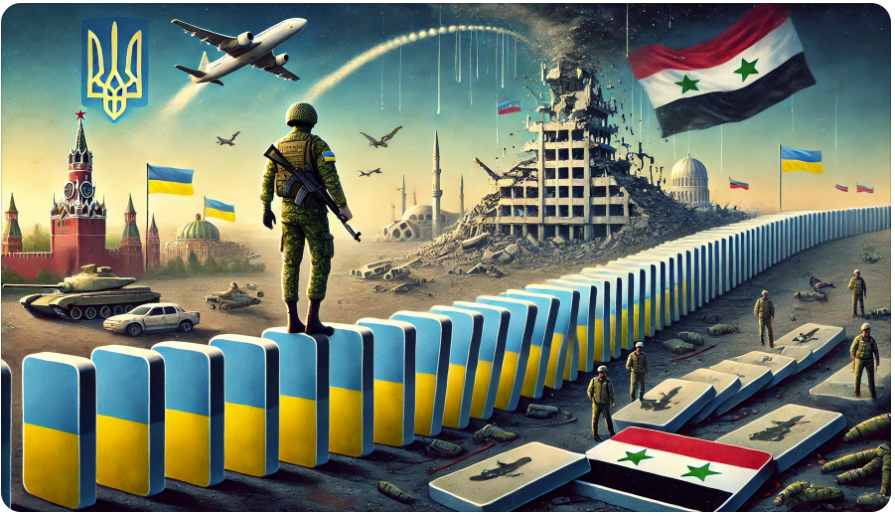
This paper examines the direct correlation between Ukraine’s military resistance against Russian invasion and the subsequent collapse of Bashar al-Assad’s regime in Syria. Through an analysis of military redeployments, resource allocation, and strategic implications, this study demonstrates how Ukrainian resistance created conditions that enabled Syrian liberation movements to succeed. These developments provide a unique perspective on the interconnectedness of global conflicts and the cascading effects of resistance movements. All claims are based on existing reports, requiring verification through primary sources and expert analysis.
Introduction
The fall of Bashar al-Assad’s government in Syria represents an unexpected consequence of Ukraine’s sustained resistance against Russian aggression. This study seeks to unpack how the military success of the Ukrainian Armed Forces forced significant reallocation of Russian military resources and personnel, weakening Russia’s capacity to maintain its support for Assad’s regime. By examining the sequence of events that led to this collapse, we aim to highlight the broader implications of Ukraine’s resistance on global power dynamics and authoritarian regimes.
Historical Context
The Arab Spring uprisings in Syria marked the beginning of a protracted civil war. Opposition forces initially gained momentum, but the Assad regime’s survival was largely due to extensive Russian military intervention, which included:
- Carpet Bombing of Aleppo: Russian airstrikes devastated civilian populations and infrastructure, enabling the Assad regime to regain control of critical territories.
- Deployment of Wagner Group Mercenaries: These private military contractors played a pivotal role in ground operations, often engaging in brutal tactics to suppress opposition forces.
- Use of Phosphorus Bombs and Chemical Weapons: Alleged war crimes included the deployment of banned weapons to instill fear and submission among rebel-held areas.
- Sustained Air Support: Russian fighter jets and bombers provided essential cover for Assad’s forces, shifting the balance of power in the regime’s favor.
Despite these efforts, Russia’s involvement in Syria was deeply resource-intensive, laying the groundwork for vulnerabilities once Ukraine’s resistance began to strain Moscow’s military capabilities.
Ukraine’s Impact on Russian Military Capacity
Resource Reallocation
The full-scale invasion of Ukraine in February 2022 necessitated a massive redeployment of Russian military assets, diverting attention and resources from Syria. Key changes included:
- Transfer of Air Assets: Advanced fighter jets and bombers previously stationed in Syria were redirected to the Ukrainian front, leaving Assad’s forces without critical air support.
- Withdrawal of Wagner Group Forces: Mercenaries were reassigned to Ukraine, where they were tasked with high-casualty missions in regions like Bakhmut, resulting in reduced manpower for ground operations in Syria.
- Reduction in Tactical Support: Russian advisors and special forces who had coordinated Syrian campaigns were called back to focus on Ukraine.
- Logistics and Supply Chain Strain: The need to maintain a prolonged war in Ukraine stretched Russia’s ability to provide consistent military aid to its Syrian allies.
Strategic Consequences
Russia’s overextension led to several strategic setbacks:
- Inability to Maintain Multiple Conflict Theaters: Russia struggled to simultaneously sustain operations in Ukraine and Syria, leading to diminishing influence in the Middle East.
- Weakened Support for Allied Regimes: Reduced military assistance to Assad’s government emboldened opposition forces.
- Economic Strain from Sanctions and War Costs: Western sanctions and the financial burden of the Ukrainian conflict further limited Russia’s ability to fund its Syrian campaign.
The Fall of Damascus
Rapid Collapse
The collapse of Assad’s regime unfolded with unexpected speed, revealing its fragility in the absence of Russian support:
- Swift Advance of Rebel Forces: Syrian opposition groups capitalized on reduced Russian intervention, regaining lost territories and encircling Damascus.
- Rapid Military Collapse: Without Russian airstrikes and ground reinforcements, Assad’s forces suffered a series of defeats, culminating in their inability to hold key cities.
- Mass Desertions: Syrian government troops, demoralized by declining Russian support, abandoned their positions en masse.
- Loss of Territorial Control: Opposition forces seized significant regions, signaling the end of Assad’s dominance.
Contributing Factors
Several critical factors facilitated this rapid collapse:
- Absence of Russian Air Support: The removal of Russian fighter jets left Assad’s forces vulnerable to opposition offensives.
- Withdrawal of Experienced Mercenary Forces: The loss of Wagner Group personnel created a vacuum in operational expertise.
- Declining Morale: Government troops, already weary from years of war, lost the will to fight without external backing.
- Growing Confidence Among Opposition Forces: Emboldened by their successes, rebel groups launched coordinated attacks, overwhelming regime defenses.
Broader Implications
Regional Impact
The collapse of Assad’s regime triggered a series of regional shifts:
- Weakening of Russian Influence: Russia’s inability to protect Assad highlighted its declining global power, diminishing its credibility as an ally.
- Opportunities for Resistance Movements: The Syrian opposition’s victory inspired other groups fighting against authoritarian regimes in the region.
- Shifting Power Dynamics: The reduction of Russian involvement allowed other powers, such as Turkey and Iran, to assert greater influence in Syria.
Future Considerations
The interconnectedness of the Ukrainian and Syrian conflicts suggests broader implications:
- Further Weakening of Russian-Supported Regimes: Countries reliant on Russian military backing may face similar vulnerabilities.
- Growing Resistance Movements: The success of Syrian rebels could embolden opposition groups worldwide.
- Continuation of Russian Military Decline: Prolonged involvement in Ukraine is likely to further erode Russia’s global military capabilities.
- Reshaping of Global Power Structures: As Russia’s influence wanes, new alliances and power dynamics are likely to emerge.
Conclusion
Ukraine’s successful resistance against Russian aggression not only safeguarded its sovereignty but also indirectly enabled Syrian liberation by undermining Russian military intervention. The cascading effects of Ukraine’s victory highlight the interconnectedness of global conflicts and the potential for resistance movements to inspire change across borders.
The collapse of Bashar al-Assad’s regime underscores the fragility of authoritarian governments dependent on external support. This case study demonstrates the strategic importance of resistance in one region as a catalyst for liberation in another, reinforcing the need for comprehensive analysis and verification of interconnected global events.
References
All claims and data in this study require verification through primary sources, including:
- International reports on Russian military movements.
- Analyses from defense experts on the impact of Ukraine’s resistance.
- Eyewitness accounts and documentation from Syrian opposition forces.
- Economic assessments of Russian sanctions and their implications.
Notes
Verification of these events is crucial to understanding the broader implications of Ukraine’s resistance. Future studies should focus on gathering empirical evidence to substantiate the connections and assess long-term regional impacts.
Leave a Reply