
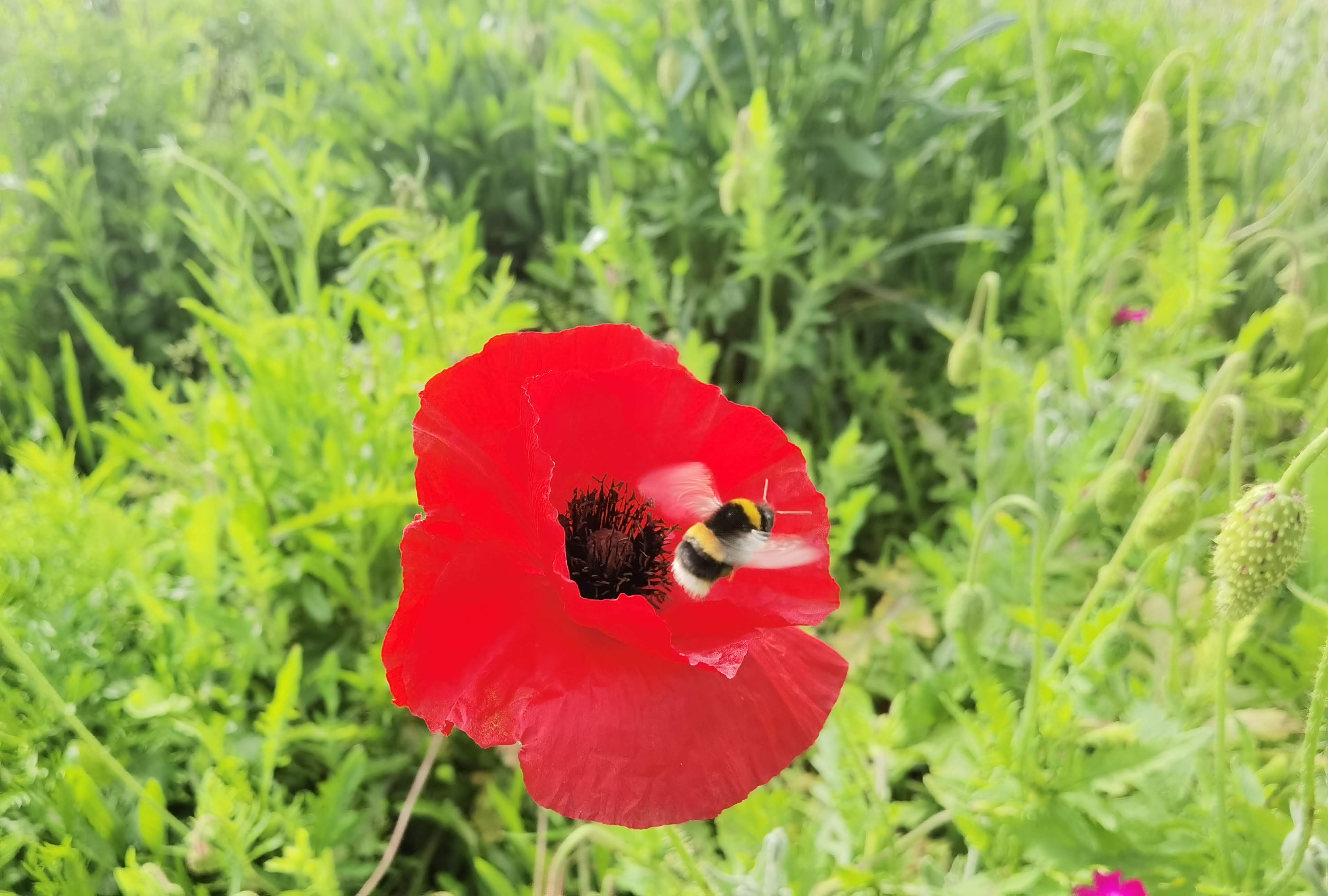

Today marks 1,169 days since the full-scale russian invasion of Ukraine began. As the poppies in my garden prepare to bloom, they remind me of the timeless connection between these delicate flowers and our duty to remember those who have suffered in war.
The Poppies in My Garden
The poppies in my garden stand as silent sentinels of memory. Their buds are swelling now, ready to unfurl into brilliant crimson blooms that will dance in the spring breeze. Each year they return, a living reminder of resilience and hope against a backdrop of remembrance.
As we mark 80 years since the victory over Nazism in Europe during World War II, these flowers connect us to a tradition of remembrance that spans generations and continents.
The Story of Remembrance Poppies
The red poppy’s journey to becoming a symbol of remembrance began in the fields of Flanders during World War I. In 1693, following the Battle of Landen in modern-day Belgium where 10,000 soldiers fell, a Scottish politician noted in a letter to his sister how the earth, “udобрений 20,000 трупів, розцвів мільйонами червоних маків” (fertilized by 20,000 corpses, bloomed with millions of red poppies).
This natural phenomenon gained poetic significance through Canadian military doctor John McCrae’s 1915 poem “In Flanders Fields,” written after he lost his friend Lieutenant Alex Helmer at the Battle of Ypres. The poem’s powerful imagery of poppies growing among the crosses inspired American teacher Moina Michael in 1918 to propose wearing red poppies as a symbol of remembrance.
The tradition spread globally. In 1920, the American National Legion adopted the poppy as its emblem for fallen soldiers, while Anna Guérin of France initiated “Poppy Day,” selling silk poppies made by French widows and children from devastated regions to raise funds for veterans.
The Ukrainian Poppy of Remembrance
In Ukraine, the red poppy holds special significance. According to folk legends, poppies bloom where Ukrainian Cossack blood was spilled, creating a deeply rooted connection between the flower and Ukrainian sacrifice.
In 2015, Ukraine officially adopted the red poppy as the symbol for the Day of Remembrance and Victory over Nazism in World War II. The Ukrainian poppy design, created by Kharkiv artist Serhiy Mishakin, is beautifully metaphorical—simultaneously representing both a poppy flower and a bloodstain from a bullet. Often displayed with the dates 1939-1945 and the phrase “Ніколи знову” (Never Again), it replaced the St. George ribbon that had become associated with Russian imperial ambitions.
A Global Tradition
Today, the “Remembrance Poppy” is worn in Commonwealth nations before Remembrance Day on November 11 and to honor military personnel who died in all armed conflicts. This tradition is particularly strong in Australia, Barbados, Canada, New Zealand, Pakistan, South Africa, and the United Kingdom.
In the UK, a special “poppy factory” established after World War I provides employment for veterans who create poppies and memorial wreaths for the Royal Family and the Royal British Legion’s annual remembrance events.
Remembering Today
As World War II fades from living memory, with approximately 8-10 million Ukrainians among the 50-75 million total casualties, the poppy reminds us that remembrance is not passive—it is an active commitment to peace and humanity.
In 2023, President Volodymyr Zelensky signed legislation officially designating May 8 as the Day of Remembrance and Victory over Nazism in World War II, aligning Ukraine with the European tradition of commemoration.
Today, as poppies prepare to bloom across Ukraine and in my garden in Kamloops, Canada, they stand as living connections between past and present suffering. They remind us that in remembering those lost to conflict—whether 80 years ago or in the ongoing struggle for Ukraine’s freedom—we reaffirm our commitment to a world where such sacrifices need not be made again.
May these blooms, emerging from soil watered by tears and sacrifice, inspire us to work for a future where peace finally takes root.
To read more about meaning of red poppies as a flower of remembrance in Ukraine check the following article in Ukrainian: Як червоний мак став символом пам’яті та замінив георгіївську стрічку в риториці про Другу світову війну Suspilne Culture article (in Ukrainian)