
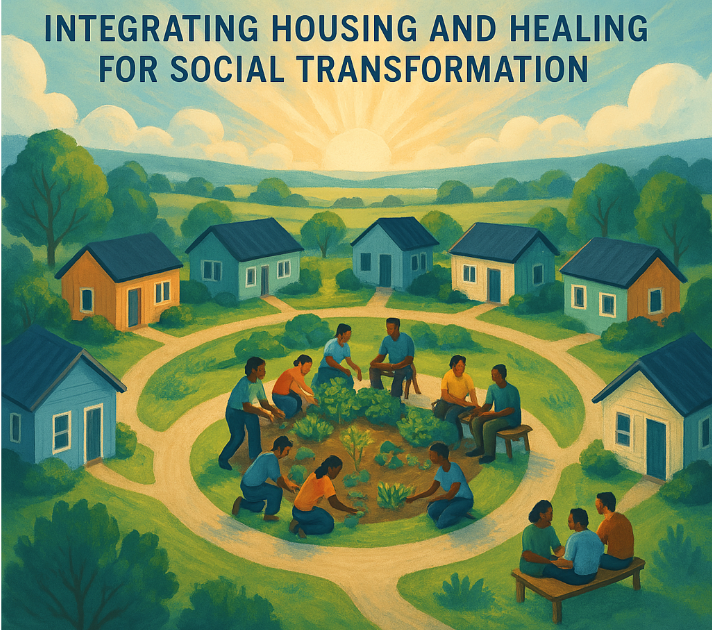

A groundbreaking directed studies course focusing on recovery communities and social transformation will launch this summer under the guidance of Dr. Oleksandr (Sasha) Kondrashov. The course, “Recovery Communities: Integrating Housing and Healing for Social Transformation” (SOCW 4900), represents a culmination of Dr. Kondrashov’s twenty years of teaching experience and research in Canada.
A Collaborative Approach to Course Development
What makes this academic offering particularly unique is its collaborative development process. Dr. Kondrashov has thoughtfully integrated suggestions from engaged TRU Bachelor of Social Work students, creating a comprehensive curriculum that bridges established research with emerging perspectives in the field.
“I want to extend my sincere thanks to Trevor, Haley, and Kennedy for their valuable input on course readings,” says Dr. Kondrashov. “Their suggestions have enriched the course content with optional suggested readings and helped create a more comprehensive learning experience that draws on diverse viewpoints.”
Addressing Critical Social Issues
The course addresses pressing intersections between substance use disorders, housing insecurity, and community-based recovery approaches. Students will explore evidence-based models of recovery support, therapeutic communities, innovative housing solutions, and culturally responsive healing practices, with special attention given to Indigenous approaches to healing and trauma-informed practices.
“This course represents a synthesis of teaching experience I had at the University of Manitoba Aboriginal Focus Programs, Dalhousie University and Thompson Rivers University that I’ve been developing throughout my career,” notes Dr. Kondrashov. “I’m excited to guide students through these complex topics and see how they apply this integrated knowledge to real-world challenges.”
Open Learning Opportunity
While the directed studies format offers formal academic credit for registered students at TRU, Dr. Kondrashov has made the comprehensive reading list available to anyone interested in self-directed learning on these topics. “Learning should not be confined to institutional structures,” he explains. “By sharing these resources, I hope to foster broader dialogue about recovery communities and social transformation.”
Those interested in pursuing this as a formal directed studies course can contact Dr. Kondrashov directly to discuss registration options. The first directed studies offering begins in late April 2025.
Week 1: Foundations of Recovery Communities
Required:
- Piat, M., & Sabetti, J. (2012). Recovery in Canada: Toward social equality. International Review of Psychiatry, 24(1), 19-28.
- Best, D., & Hennessy, E. A. (2022). The science of recovery capital: where do we go from here?. Addiction, 117(4), 1139-1145.
- Bartram, M. (2021). ‘It’s really about wellbeing’: A Canadian investigation of harm reduction as a bridge between mental health and addiction recovery. International Journal of Mental Health and Addiction, 19(5), 1497-1510.
Optional (Student suggested):
- Hoeppner, B. B., Simpson, H. V., Weerts, C., Riggs, M. J., Williamson, A. C., Finley-Abboud, D., & Kelly, J. F. (2024). A nationwide survey study of recovery community centers supporting people in recovery from substance use disorder. Journal of Addiction Medicine, 18(3), 274-281.
- Stevens, E. B., Jason, L. A., Ferrari, J. R., Olson, B., & Legler, R. (2012). Sense of community among individuals in substance abuse recovery. Journal of Groups in Addiction & Recovery, 7(1), 15–28.
- Goodwin, N. (2016). Understanding integrated care. International Journal of Integrated Care, 16(4), 6.
- Argento, Elena, Rielle Capler, Gerald Thomas, Philippe Lucas, and Kenneth W. Tupper. “Perspectives on Healing and Recovery from Addiction with Ayahuasca-Based Therapy Among Members of an Indigenous Community in Canada.” Ayahuasca Healing and Science (2021): 171-188.
Week 2: Housing Solutions and Community Models
Required:
- Gaetz, S., Scott, F., & Gulliver, T. (2013). Housing First in Canada: Supporting communities to end homelessness. Canada Homelessness Research Network.
- Paquette, K., & Pannella Winn, L. A. (2016). The role of recovery housing: prioritizing choice in homeless services. Journal of dual diagnosis, 12(2), 153-162.
- Ashford, R. D., Brown, A. M., Ryding, R., & Curtis, B. (2020). Building recovery ready communities: The recovery ready ecosystem model and community framework. Addiction Research & Theory, 28(1), 1-11.
Optional (Student suggested):
- Benitez, C., Conway, C., & Maddern, D. (2024). How much does it cost to operate tiny home villages for people experiencing homelessness Retrieved from https://digitalcommons.pepperdine.edu/cgi/viewcontent.cgi?article=1000&context=sppcapstones
- Mingoya, C. A. (2015). Building together: Tiny house villages for the homeless: A comparative case study. Massachusetts Institute of Technology, Department of Urban Studies and Planning. Retrieved from https://www.buildinginnovations.org/wp-content/uploads/mingoya_2015.pdf
- Dewey, J. M., Hibbard, P., Watson, D. P., Konchak, J. N., & Hinami, K. (2024). A qualitative investigation into the effectiveness of a housing navigator program linking justice-involved clients with recovery housing. Health & Justice, 12(1), 1-12.
- Mericle, A., Slaymaker, V., Gliske, K., Ngo, Q., & Subbaraman, M. (2022). The role of recovery housing during outpatient substance use treatment. Journal of Substance Abuse Treatment, 133, 108638.
Week 3: Care Continuum and Treatment Access
Required:
- Bartram, M. (2019). Toward a Shared Vision for Mental Health and Addiction Recovery and Well-Being:: An Integrated Two-Continuum Model. Journal of Recovery in Mental Health, 2(2-3), 55-72.
- Stanojlović, M., & Davidson, L. (2021). Targeting the barriers in the substance use disorder continuum of care with peer recovery support. Substance abuse: research and treatment, 15, 1178221820976988.
- Day, E., Pechey, L. C., Roscoe, S., & Kelly, J. F. (2025). Recovery support services as part of the continuum of care for alcohol or drug use disorders. Addiction.
Optional (Student suggested):
- Proctor, S. L., & Herschman, P. L. (2014). The continuing care model of substance use treatment: What works, and when is “enough,” “enough”? Psychiatry Journal, 2014, 692423.
- Hadland, S. E. (2020). The broken care continuum for young adults with opioid addiction. Journal of Adolescent Health, 67(6), 735-736.
- Carr, C. J., Xu, J., Redko, C., Lane, D. T., Rapp, R. C., Goris, J., & Carlson, R. G. (2008). Individual and system influences on waiting time for substance abuse treatment. Journal of Substance Abuse Treatment, 34(2), 192-201.
- Wiercigroch, D., Sheikh, H., & Hulme, J. (2020). A rapid access to addiction medicine clinic facilitates treatment of substance use disorder and reduces substance use. Substance Abuse Treatment, Prevention, and Policy, 15(4).
Week 4: Therapeutic Communities and Evidence-Based Practice
Required:
- De Leon, G., Perfas, F. B., Joseph, A., & Bunt, G. (2020). Therapeutic communities for addictions: essential elements, cultural, and current issues. In Textbook of addiction treatment: International perspectives (pp. 697-707). Cham: Springer International Publishing.
- Salyers, M. P., & Tsemberis, S. (2007). ACT and recovery: Integrating evidence-based practice and recovery orientation on assertive community treatment teams. Community mental health journal, 43, 619-641.
- Cutcliffe, J. R., Travale, R., Richmond, M. M., & Green, T. (2016). Considering the contemporary issues and unresolved challenges facing therapeutic communities for clients with alcohol and substance abuse. Issues in Mental Health Nursing, 37(9), 642-650.
Optional (Student suggested):
- De Leon, G. (2010). Is the therapeutic community an evidence-based treatment? What the evidence says. Therapeutic Communities, 31(2), 104-128.
- Pearce, S., & Pickard, H. (2012). How therapeutic communities work: Specific factors related to positive outcome. International Journal of Social Psychiatry, 59(8), 374-383.
- Vanderplasschen, W., Colpaert, K., Autrique, M., Rapp, R. C., Pearce, S., Broekaert, E., & Vandevelde, S. (2013). Therapeutic communities for addictions: A review of their effectiveness from a recovery‐oriented perspective. The Scientific World Journal, 2013, 427817.
- Yang, Y., Perkins, D., & Stearns, A. (2018). Barriers and facilitators to treatment engagement among clients in inpatient substance abuse treatment. Qualitative Health Research, 28(9), 1474-1485.
Week 5: Cultural and Indigenous Approaches
Required:
- Yu, Z., Steenbeek, A., Biderman, M., Macdonald, M., Carrier, L., & MacDonald, C. (2020). Characteristics of Indigenous healing strategies in Canada: a scoping review. JBI Evidence Synthesis, 18(12), 2512-2555.
- Rowan, M., Poole, N., Shea, B., Gone, J. P., Mykota, D., Farag, M., … & Dell, C. (2014). Cultural interventions to treat addictions in Indigenous populations: findings from a scoping study. Substance abuse treatment, prevention, and policy, 9, 1-27.
- Lavallee, L. F., & Poole, J. M. (2010). Beyond recovery: Colonization, health and healing for Indigenous people in Canada. International journal of mental health and addiction, 8, 271-281.
Optional (Student suggested):
- Iseke, J. M. (2010). Importance of Métis ways of knowing in healing communities. Canadian Journal of Native Education, 33(1), 83-97.
- Marsh, T. N., Cote-Meek, S., Young, N. L., Najavits, L. M., & Toulouse, P. (2016). Indigenous healing and seeking safety: A blended implementation project for intergenerational trauma and substance use disorders. International Indigenous Policy Journal, 7(2), 1-35.
- Lawson-Te Aho, K., Fariu-Ariki, P., Ombler, J., Aspinall, C., Howden-Chapman, P., & Pierse, N. (2019). A principles framework for taking action on Māori/Indigenous homelessness in Aotearoa/New Zealand. SSM-Population Health, 8, 100450.
- Boyd, J., Maher, L., Austin, T., Lavalley, J., Kerr, T., & McNeil, R. (2022). Mothers who use drugs: Closing the gaps in harm reduction response amidst the dual epidemics of overdose and violence in a Canadian urban setting. American Journal of Public Health, 112(S2), S151-S159.
Week 6: Policy and Systems Change
Required:
- MacPherson, D., Mulla, Z., & Richardson, L. (2006). The evolution of drug policy in Vancouver, Canada: strategies for preventing harm from psychoactive substance use. International Journal of Drug Policy, 17(2), 127-132.
- Ziegler, B. R., Wray, A. J., & Luginaah, I. (2019). The ever-changing narrative: Supervised injection site policy making in Ontario, Canada. International Journal of Drug Policy, 74, 98-111.
- Watson, T. M., Chochla, S., Kim, A., MacIntosh, K., Bonn, M., Haines-Saah, R., … & Penney, G. (2024). Defining a public health approach to substance use: Perspectives from professionals and practitioners across Canada. International Journal of Drug Policy, 128, 104427.
Optional (Student suggested):
- Curtin, K. D., Thomson, M., Hyshka, E., Colman, I., Wild, T. C., Belon, A. P., & Nykiforuk, C. I. J. (2024). Assessing support for substance use policies among the general public and policy influencers in two Canadian provinces. Substance Abuse Treatment, Prevention, and Policy, 19(1), 1-15.
- Josewski, V., Morrow, M., Warkentin, R., Ibrahim, M., & Cohen, A. J. (2024). British Columbia’s mental health system: Addressing systemic human rights issues. Studies in Social Justice, 18(3), 440-460.
- Homayra, F., Pearce, L. A., Wang, L., Panagiotoglou, D., Sambo, T. F., Smith, N., McKendry, R., Wilson, B., Joe, R., Hawkins, K., Barrios, R., Mitton, C., & Nosyk, B. (2021). Cohort profile: The Provincial Substance Use Disorder Cohort in British Columbia, Canada. International Journal of Epidemiology, 50(3), 733-734.
- Corredor-Waldron, A., & Currie, J. (2022). Tackling the substance use disorder crisis: The role of access to treatment facilities. Journal of Health Economics, 81, 102579.
Week 7: Community Healing and Support Networks
Required:
- Russell, C., Ali, F., Nafeh, F., LeBlanc, S., Imtiaz, S., Elton-Marshall, T., & Rehm, J. (2020). Examining Substance Use Services and Treatment Barriers and Needs among People with Lived Experience (PWLE) in Ontario, Canada. Research Square, 1-17.
- Bone, R., Dell, C., Koskie, M., Kushniruk, M., & Shorting, C. (2011). The lived experience of volatile substance misuse: How support contributes to recovery and sustained well-being. Substance use & misuse, 46(sup1), 119-127.
- Price-Robertson, R., Obradovic, A., & Morgan, B. (2017). Relational recovery: beyond individualism in the recovery approach. Advances in mental health, 15(2), 108-120.
Optional (Student suggested):
- Chioneso, N. A., Hunter, C. D., Gobin, R. L., McNeil Smith, S., Mendenhall, R., & Neville, H. A. (2020). Community healing and resistance through storytelling: A framework to address racial trauma in Africana communities. Journal of Black Psychology, 46(2-3), 95-121.
- Stevens, E., Guerrero, M., Green, A., & Jason, L. A. (2018). Relationship of hope, sense of community, and quality of life. Journal of Community Psychology, 46(5), 567-574.
- Islam, M. F., Guerrero, M., Nguyen, R. L., Porcaro, A., Cummings, C., Stevens, E., & Jason, L. A. (2023). The importance of social support in recovery populations: Toward a multilevel understanding. Alcoholism Treatment Quarterly, 41(2), 222-236.
- Pettersen, H., Landheim, A., Skeie, I., Biong, S., Brodahl, M., Oute, J., & Davidson, L. (2019). How social relationships influence substance use disorder recovery: A collaborative narrative study. Substance Abuse: Research and Treatment, 13, 1-8.
Week 8: Emergency Services and System Navigation
Required:
- Young, M. G., & Manion, K. (2017). Harm reduction through housing first: An assessment of the Emergency Warming Centre in Inuvik, Canada. Harm Reduction Journal, 14, 1-11.
- Akriti, D. C., Kittson, K., Malik, T., & Omala, J. (2022). Promoting continuity of care among people experiencing homelessness and alcohol addiction in Montreal, Quebec. Retrieved from https://www.mcgill.ca/maxbellschool/files/maxbellschool/2_-_obm_final_policy_brief_july_10_2022.pdf
- Pauly, B., Brown, M., Evans, J., Gray, E., Schiff, R., Ivsins, A., … & Stockwell, T. (2019). “There is a Place”: impacts of managed alcohol programs for people experiencing severe alcohol dependence and homelessness. Harm Reduction Journal, 16, 1-14.
Optional (Student suggested):
- Feins, J. D., & Fosburg, L. B. (1999). Emergency shelter and services: Opening a front door to the continuum of care. U.S. Department of Housing and Urban Development. Retrieved from https://aspe.hhs.gov/sites/default/files/migrated_legacy_files/131661/6817.pdf#page=251
- Bear, U., Poole, E., Muller, C., Hanson, J., Noonan, T., Rosenman, R., & Manson, S. (2023). The use of patient navigation to transition detoxification patients to substance use treatment in the Alaska interior. Public Health in Practice, 6, 100418.
- Au, M., Kehn, M., Ireys, H., Blyler, C., & Brown, J. (2018). Care coordinators in integrated care: Burnout risk, perceived supports, and job satisfaction. American Journal of Preventive Medicine, 54(6), S250-S257.
- Mark, T. L., Howard, J. N., Misra, S., & Fuller, L. (2019). Bed tracking systems: Do they help address challenges in finding available inpatient beds? Psychiatric Services, 70(10), 921-926.
Week 9: Quality Improvement and Innovation
Required:
- Reif, S., Braude, L., Lyman, D. R., Dougherty, R. H., Daniels, A. S., Ghose, S. S., … & Delphin-Rittmon, M. E. (2014). Peer recovery support for individuals with substance use disorders: Assessing the evidence. Psychiatric Services, 65(7), 853-861.
- Watson, T. M., Benassi, P. V., Agic, B., Maharaj, A., & Sockalingam, S. (2022). Addressing the complex substance use and mental health needs of people leaving prison: Insights from developing a national inventory of services in Canada. International Journal of Drug Policy, 100, 103523.
- Sukhera, J., Knaak, S., Ungar, T., & Rehman, M. (2022). Dismantling structural stigma related to mental health and substance use: an educational framework. Academic Medicine, 97(2), 175-181.
Optional (Student suggested):
- Paget, S., Goodman, P., & Wood, N. (2008). The development of a quality improvement network for addiction therapeutic communities. Therapeutic Communities, 29(1), 16-24.
- Leon, G. D., Sacks, S., Staines, G., & McKendrick, K. (2000). Modified therapeutic community for homeless mentally ill chemical abusers: Treatment outcomes. The American Journal of Drug and Alcohol Abuse, 26(3), 461-480.
- Giacomucci, S., Gera, S., Briggs, D., & Bass, K. (2018). Experiential addiction treatment: Creating positive connection through sociometry and therapeutic spiral model safety structures. Journal of Addiction and Addictive Disorders, 5(1), 17.
- Dye, L. R. (2025). Commentary on the Donovan Memorial Lecture: Addiction and recovery as a continuum. Journal of Medical Toxicology, 21, 1-8.
Week 10: Recovery Capital and Family Systems
Required:
- Best, D., Vanderplasschen, W., Van de Mheen, D., De Maeyer, J., Colman, C., Vander Laenen, F., … & Nagelhout, G. E. (2018). REC-PATH (recovery pathways): Overview of a four-country study of pathways to recovery from problematic drug use. Alcoholism Treatment Quarterly, 36(4), 517-529.
- White, W. (2008). Recovery management and recovery-oriented systems of care. Retrieved from https://dbhids.org/wp-content/uploads/2015/07/2008-Recovery-Management-and-Recovery-Oriented-Systems-of-Care-Monograph.pdf
- Brophy, H., Dyson, M., & Katherine, R. (2023). Concept analysis of recovery from substance use. International Journal of Mental Health Nursing, 32(1), 117-127.
Optional (Student suggested):
- Yates, R. (2014). Recovery capital, addiction theory, and the development of recovery communities. The Turkish Journal on Addictions, 1(2), 96-112.
- Lauteiri, A. (2025). Family roles in addiction & the importance of family support in recovery. Laguna Treatment Center. Retrieved from https://lagunatreatment.com/family-resources/addiction-and-family/
- Irvin, J. (2024). The compounding effect of intersectionality on people who use drugs. The Network for Public Health Law. Retrieved from https://www.networkforphl.org/news-insights/the-compounding-effect-of-intersectionality-on-people-who-use-drugs/
- Smith, B. D., & Mogro-Wilson, C. (2007). Multi-level influences on the practice of inter-agency collaboration in child welfare and substance abuse treatment. Children and Youth Services Review, 29(5), 545-556.
Week 11: Peer Support and Recovery Networks
Required:
- Mercer, F., Miler, J. A., Pauly, B., Carver, H., Hnízdilová, K., Foster, R., & Parkes, T. (2021). Peer support and overdose prevention responses: a systematic ‘state-of-the-art’review. International journal of environmental research and public health, 18(22), 12073.
- Scannell, C. (2021). Voices of hope: substance use peer support in a system of care. Substance Abuse: Research and Treatment, 15, 11782218211050360.
- Sinclair, D. L., Chantry, M., De Ruysscher, C., Magerman, J., Nicaise, P., & Vanderplasschen, W. (2024). Recovery-supportive interventions for people with substance use disorders: a scoping review. Frontiers in psychiatry, 15, 1352818.
Optional (Student suggested):
- Stanojlovic, M., & Davidson, L. (2021). Targeting the barriers in the substance use disorder continuum of care with peer recovery support. Substance Abuse: Research and Treatment, 15, 1-12.
- Andreas, D., Ja, D. Y., & Wilson, S. (2010). Peers reach out supporting peers to embrace recovery (PROSPER): A center for substance abuse treatment recovery community services program. Alcoholism Treatment Quarterly, 28(3), 326-338.
- Boisvert, R. A., Martin, L. M., Grosek, M., & Clarie, A. J. (2008). Effectiveness of a peer-support community in addiction recovery: Participation as intervention. Occupational Therapy International, 15(4), 205-220. Retrieved from https://onlinelibrary.wiley.com/doi/abs/10.1002/oti.257
- Richert, T., Stallwitz, A., & Nordgren, J. (2023). Harm reduction social work with people who use drugs: A qualitative interview study with social workers in harm reduction services in Sweden. Harm Reduction Journal, 20(1), 1-14.
Week 12: Sustainable Community Development
Required:
- Abebe, N. Towards a Community Driven, Collaborative Continuum of Substance Use Care in British Columbia. Retrieved from https://www.sustain.ubc.ca/sites/default/files/2021-008_Towards%20a%20Community%20Driven,%20Collaborative_Abebe.pdf
- Neufeld, S. D. (2023). Ending stigma for whom? A critical community-based participatory research project to examine Canadian substance use-focused anti-stigma campaigns. Retrieved from https://summit.sfu.ca/_flysystem/fedora/2024-01/etd22875.pdf
- Lodge, A., Partyka, C., & Surbey, K. (2022). A novel home-and community-based mobile outreach detoxification service for individuals identifying problematic substance use: implementation and program evaluation. Canadian Journal of Public Health, 113(4), 562-568.
Optional (Student suggested):
- Casselman, M. (2024). Tiny homes: Empowering communities through accessibility and sustainability [Master’s thesis]. Northern Arizona University.
- Gold, CPSA., Oliver, W., & Salerno, C. (2020). Implementing tiny homes as permanent supportive housing. Retrieved from https://www.urban.org/sites/default/files/publication/102715/implementing-tiny-homes-as-permanent-supportive-housing.pdf
- Anderson, J. E., & Larke, S. C. (2009). The Sooke Navigator project: Using community resources and research to improve local service for mental health and addictions. Mental Health in Family Medicine, 6(1), 21-28.
- Simon, L., Slichta, A., & Monroe, A. F. (2014). Improving care and service coordination for vulnerable populations through collaboratives: One funder’s approach, impact, and implications for the field. The Foundation Review, 6(2), 27-51.
Acknowledgement: I want to acknowledge Trevor Starchuk, Haley Baker, and Kennedy Baker for suggesting readings for the course that has become part of the optional reading package for students who are interested in taking the course as part of their directed studies option