
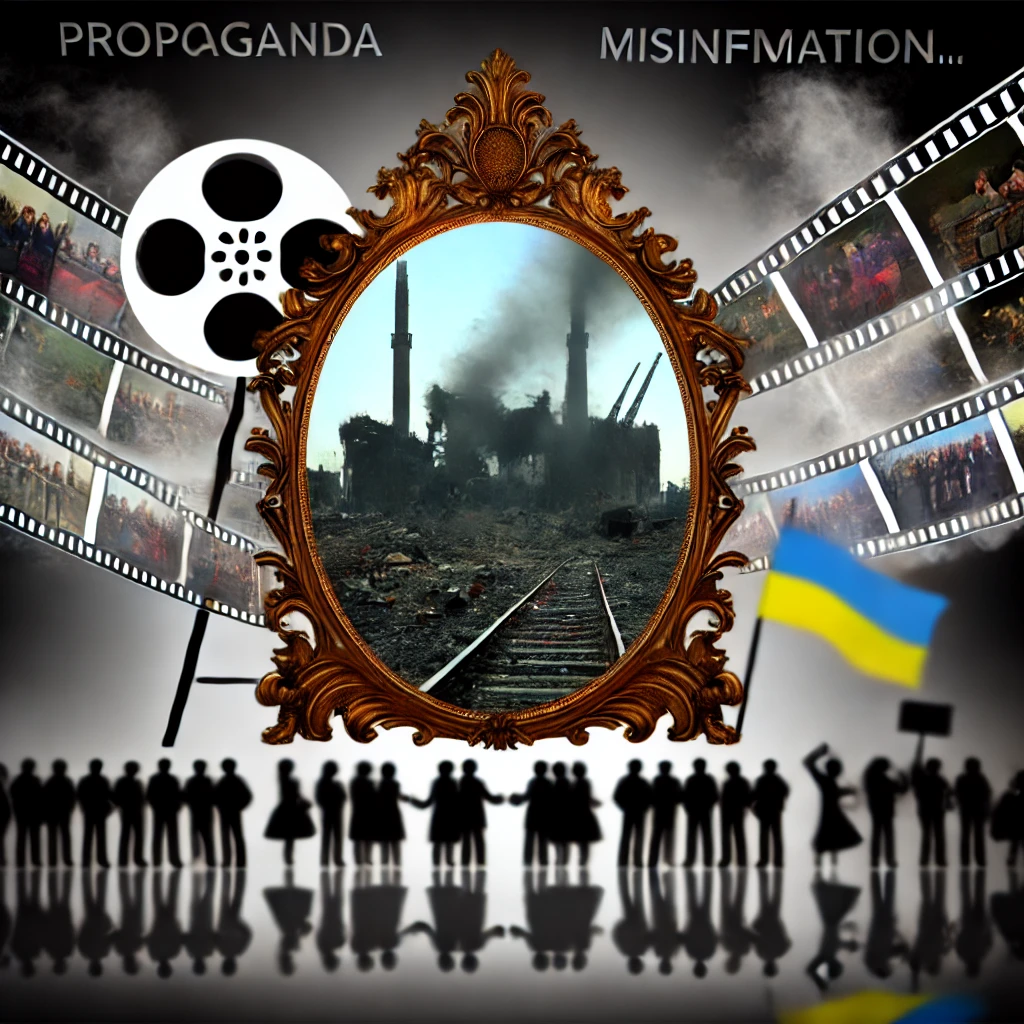

Preamble: Unmasking “Russians at War” – A Case Study in Modern Propaganda
As the author of the last three articles (current and TIFF’s Dangerous Misstep: The Absurdity of ‘Balancing’ Aggression https://krasun.ca/2024/09/13/tiffs-dangerous-misstep-the-absurdity-of-balancing-aggression/ and TIFF’s Ethical Failure: Standing Against the Weaponization of Art in Conflict https://krasun.ca/2024/09/13/tiffs-ethical-failure-standing-against-the-weaponization-of-art-in-conflict/ , I want to be transparent: I have not personally viewed the documentary “Russians at War.” It has not been made available online, and I have not had the opportunity to attend screenings in Venice or Toronto. However, this lack of direct viewing does not preclude a critical analysis of the film and its impact.
My assessment is based on a thorough review of credible sources, fact-checking, and an examination of the filmmaker’s online presence, particularly her Facebook profile (https://www.facebook.com/anastasia.trofimova.10). The pattern of deleted critical comments on this profile is telling, suggesting a curated narrative that aligns with the film’s controversial portrayal of Russian soldiers.
After extensive research, it has become clear that “Russians at War” is a meticulously crafted piece of Russian propaganda aimed at Western audiences. Its effectiveness lies in its subtlety, using the guise of humanization and the shield of free speech to soften the image of an invading force.
I am heartened by the peaceful protests and awareness campaigns led by those who stand with Ukraine. These actions highlight the ongoing struggle against misinformation and the vulnerability of Ukraine’s people, who continue to suffer while the world grapples with how to counter such insidious propaganda.
This film serves as a stark reminder of the challenges we face in combating Russian aggression, not just on the battlefield but in the realm of public opinion. It underscores the need for continued vigilance and action to expose the real dangers that Russia poses – dangers that the Ukrainian people have been facing and fighting against for centuries.
As we delve into this analysis, let us remember that the goal is not to censor but to educate. By understanding and exposing the mechanisms of propaganda, we can hope to build a more informed resistance to it, honoring the sacrifices of those who continue to defend Ukraine and, by extension, the values of freedom and democracy that we all hold dear.
In the age of information warfare, propaganda has evolved into a sophisticated tool that can easily mislead even the most well-intentioned viewers. The recent controversy surrounding the documentary “Russians at War” at the Toronto International Film Festival (TIFF) highlights the dangers of such subtle propaganda, especially in countries like Canada where many may not be fully aware of the complexities of the ongoing war in Ukraine.
The Mechanics of Modern Propaganda
Russian propaganda doesn’t always present itself as blatant misinformation. Instead, it often works by humanizing aggressors, creating false equivalencies, and sowing doubt about established facts. “Russians at War” appears to employ these tactics skillfully.
According to Darya Bassel, a producer who viewed the film at the Venice Film Festival, while the documentary may seem anti-war on the surface, it’s actually “an example of high-quality Russian propaganda” (Ukrainska Pravda, 2024). The film begins with a Ukrainian who now fights for Russia, immediately blurring the lines between aggressor and defender.
Misleading Narratives and Omissions
The documentary reportedly perpetuates several misleading narratives. It suggests that a “civil war” began in Ukraine in 2014 and that Ukrainians bombed their own country (Ukrainska Pravda, 2024). These claims echo long-standing Russian propaganda talking points that have been repeatedly debunked by international observers.
Moreover, the film apparently fails to show the destruction and casualties inflicted on Ukrainians by Russian forces. This omission creates a dangerously one-sided view of the conflict, potentially leading uninformed viewers to underestimate the severity of Russia’s actions in Ukraine.
The Danger of Humanization Without Context
While humanizing individuals can be a powerful storytelling tool, doing so without proper context in an ongoing conflict can be deeply problematic. Director Anastasia Trofimova stated, “To me, the biggest shock was to see how ordinary they were. Absolutely ordinary guys with families, with a sense of humour” (Ukrainska Pravda, 2024). This framing risks creating sympathy for individuals participating in an illegal invasion while overlooking their actions and the suffering they cause.
Personal Experience with Propaganda’s Impact
Having personally visited Crimea before 2014, I’ve witnessed firsthand how deeply ingrained Russian propaganda narratives can become. Attempting to dispel myths with local people about what they had seen on TV was an uphill battle. This experience underscores how powerful and persistent these narratives can be, especially when reinforced by seemingly objective documentaries.
The “Banned Film” Effect
While the Ukrainian community’s efforts led to the cancellation of the TIFF screening, this action risks creating a “Streisand effect.” Some people, intrigued by the controversy, may seek out the film, believing that its banning makes it more important or revealing. This could inadvertently lead more people to engage with its misleading content.
The Real Danger: Forgetting the Victims
Perhaps the most insidious effect of films like “Russians at War” is how they can distract from the real human cost of the conflict. By focusing on humanizing Russian soldiers, viewers might be led to forget the atrocities committed in places like Bucha and Mariupol. The film’s goal, intentional or not, seems to be to distract from global support for Ukraine by highlighting the suffering of Russians, while ignoring their role as aggressors in a war they chose to wage.
Conclusion
While I haven’t watched “Russians at War” myself, the reviews, trailer, and my personal experiences with Russian propaganda tactics make the dangers clear. For Canadians and others not directly impacted by the war, it’s crucial to approach such content critically and seek out balanced, fact-based information from reputable sources.
The cancellation of the TIFF screening was not about censorship, but about recognizing the real-world harm that can come from platforming sophisticated propaganda. As we navigate the complex information landscape surrounding the war in Ukraine, we must remain vigilant against attempts to manipulate our perceptions and always keep in mind the real victims of this conflict – the Ukrainian people who continue to suffer under Russian aggression.
Additional Perspectives
Several other sources provide further insight into the controversy surrounding “Russians at War”:
- The Kyiv Independent interviewed seven film industry professionals who saw the documentary. Most viewed it as problematic, with concerns about its potential to mislead viewers and its omission of crucial context about Russian war crimes (Tsurkan, 2024).
- A National Post opinion piece argues that canceling the film’s screening is a violation of free speech, suggesting that portraying Russian soldiers as human doesn’t negate Ukraine’s suffering (Selley, 2024).
- Euronews reported on the controversy at the Venice Film Festival, highlighting criticisms from Ukrainian officials and filmmakers about the documentary’s sympathetic portrayal of Russian soldiers (Walfisz, 2024).
- A review on Next Best Picture describes the film as potentially whitewashing the Russian military, noting that it fails to address well-documented atrocities (Beasdale, 2024).
- Variety’s article contrasts “Russians at War” with a Ukrainian documentary, “Songs of Slow Burning Earth,” emphasizing the disproportionate impact of the war on Ukrainians (Vourlias, 2024).
These additional sources underscore the complexity of the debate surrounding the film and the challenges of portraying ongoing conflicts in documentary form.
References
Beasdale, J. (2024, September 8). “Russians at War”. Next Best Picture. https://nextbestpicture.com/russians-at-war/
Selley, C. (2024, September 13). Canada banishes a film with the nerve to portray Russians as human. National Post. https://nationalpost.com/opinion/russians-at-war-film-free-speech
Tsurkan, K. (2024, September 13). Is ‘Russians at War’ propaganda? We asked 7 people in film who saw it. The Kyiv Independent. https://kyivindependent.com/is-russians-at-war-propaganda-we-asked-7-people-in-film-who-saw-it/
Ukrainska Pravda. (2024, September 6). Do the Russians cry too? Russia Today propagandist’s film screened at the Venice Film Festival. https://www.pravda.com.ua/eng/news/2024/09/6/7473743/
Vourlias, C. (2024, September 5). Venice Documentaries Attempt to Reckon With Russia’s ‘Historical, Transformative, Apocalyptic’ War in Ukraine. Variety. https://variety.com/2024/film/global/venice-songs-of-slow-burning-earth-olha-zhurba-russians-at-war-anastasia-trofimova-1236125030/
Walfisz, J. (2024, September 6). Sympathetic view of Russian soldiers creates controversy at Venice Film Festival. Euronews. https://www.euronews.com/culture/2024/09/06/sympathetic-view-of-russian-soldiers-creates-controversy-at-venice-film-festival
Leave a Reply