
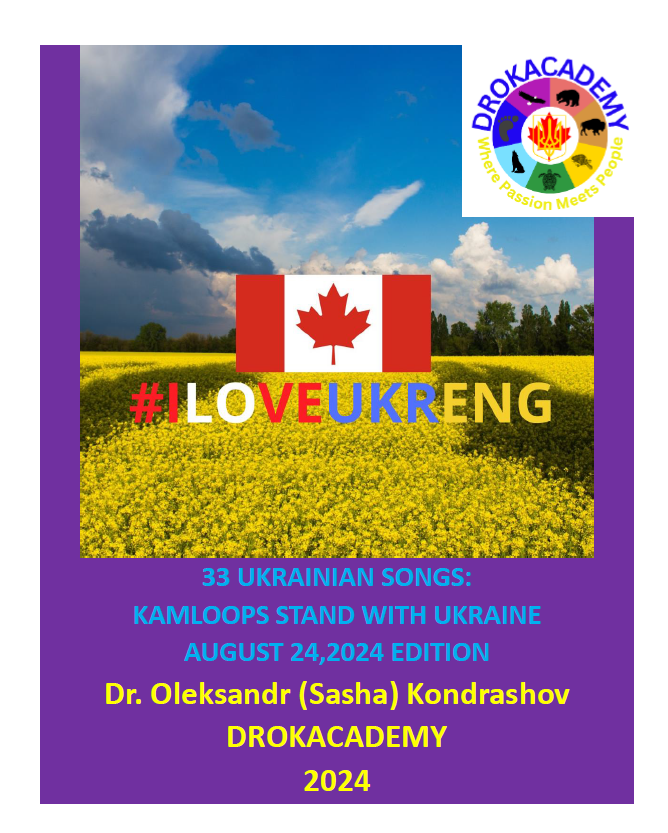

Dr. Oleksandr (Sasha) Kondrashov
Overview: Music has always been a powerful medium for conveying cultural values, historical narratives, and shared identity. For the Ukrainian diaspora, songs are not just melodies and lyrics; they are vital tools for preserving language, passing down traditions, and fostering a sense of community and belonging across generations. This guide is designed to help educators in Ukrainian diaspora communities leverage the rich heritage of Ukrainian songs to teach language, culture, and history in a meaningful and engaging way.
The exercises provided in this guide are inspired by a collection of Ukrainian songs, each with deep roots in the nation’s history and culture. The songs “Ще не вмерла Україна” (Ukrainian National Anthem), “Ой у лузі червона калина” (Oh, the Red Viburnum in the Meadow), and “Браття Українці” (Brothers, Ukrainians) serve as the foundation for these exercises, offering diverse examples of how to approach the teaching of Ukrainian language and culture through music.
The Original Book: This guide is based on a comprehensive book that compiles these and other significant Ukrainian songs, providing educators with the resources they need to incorporate music into their teaching. The book includes the lyrics of each song, historical context, translations, and detailed explanations of the cultural significance of these works. By using the exercises outlined in this guide, educators can draw directly from the book to create informative and engaging lessons for students of all ages. You can find it on Amazon and can order e-book, paperback or hardcover version to keep practicing Ukrainian language and listen to inspiring Ukrainian songs
1. Translation and Language Skills
Exercise 1: Line-by-Line Translation Challenge
- Goal: Translate the lyrics of a Ukrainian song into English (or another language), enhancing language skills.
- Steps:
- Provide the Ukrainian lyrics of the selected song.
- Have students individually translate each line into English.
- Discuss challenging phrases and nuances in small groups.
- As a class, create a consensus translation, addressing any difficult areas.
- Outcome: Students will deepen their understanding of the song’s meaning and improve their translation skills.
- Illustration: For “Ой у лузі червона калина,” students might explore the historical context behind words like “калина” (viburnum) and its symbolism in Ukrainian culture.
Exercise 2: Vocabulary Enrichment
- Goal: Expand vocabulary by studying key words and phrases in the song.
- Steps:
- Identify and list significant words or phrases from the lyrics.
- Discuss the meanings, synonyms, and contexts in which these words can be used.
- Create sentences using these words in different contexts.
- Test students on the new vocabulary through a quiz or flashcards.
- Outcome: Students will expand their Ukrainian vocabulary and usage.
- Illustration: For “Браття Українці,” explore the meaning of terms like “Небесна Сотня” and “свята Віра.”
Exercise 3: Pronunciation Practice
- Goal: Improve pronunciation of Ukrainian lyrics.
- Steps:
- Provide a phonetic transcription of the song’s lyrics.
- Practice pronunciation as a class, focusing on difficult sounds.
- Break into pairs for peer practice and feedback.
- Perform the song as a group to reinforce correct pronunciation.
- Outcome: Students will gain confidence in their ability to pronounce Ukrainian words accurately.
- Illustration: For “Браття Українці,” focus on difficult sounds like the double “т” in “Браття” and the soft “л” in “землю.”
Exercise 4: Translation Exercise
- Goal: Translate the Ukrainian song into English or another language, focusing on both literal and figurative meanings.
- Steps:
- Break the lyrics into smaller sections for easier translation.
- Translate each section, paying attention to nuances and idiomatic expressions.
- Compare translations with peers to discuss different interpretations.
- Refine the translation to reflect both the original meaning and poetic elements.
- Outcome: Students will produce a complete, accurate translation of the song.
- Illustration: For “Ой у лузі червона калина,” students can discuss how to translate cultural symbols like “калина” into English.
Exercise 5: Phonetic Drill
- Goal: Use phonetic drills to improve fluency in pronouncing the lyrics.
- Steps:
- Identify challenging sounds or words in the song’s lyrics.
- Practice these sounds in isolation, focusing on correct tongue and mouth placement.
- Repeat the challenging words slowly, gradually increasing speed.
- Integrate the words back into the full lines and recite the song.
- Outcome: Students will demonstrate improved fluency in pronouncing the lyrics.
- Illustration: Use the line “Все віддам за любу неньку мою Україну” from “Браття Українці” to practice tongue placement for “л” and “р.”
2. Historical and Cultural Context
Exercise 6: Song Origins Detective
- Goal: Research the historical context of a song’s creation.
- Steps:
- Divide the class into groups, each assigned a specific aspect (author, time period, political climate, etc.).
- Groups conduct research using provided resources and additional materials.
- Each group creates a short presentation on their findings.
- Combine presentations to create a comprehensive timeline of the song’s origins.
- Outcome: Students will gain insight into the historical significance of the song.
- Illustration: For “Ой у лузі червона калина,” explore its origins during World War I and its role in Ukrainian resistance.
Exercise 7: Historical Context Discussion
- Goal: Understand the historical background of the song.
- Steps:
- Research the historical period when the song was written.
- Discuss how the lyrics reflect the social and political context of that time.
- Write a short essay or prepare a presentation on the song’s significance during key historical moments.
- Outcome: Students will understand how the song reflects and influences historical events.
- Illustration: For “Браття Українці,” discuss how it reflects the struggles during Ukraine’s recent conflicts.
Exercise 8: Timeline Creation
- Goal: Create a timeline of significant events related to the song.
- Steps:
- Identify key historical events referenced in the song.
- Research these events and their contexts.
- Create a visual timeline linking the song to these historical moments.
- Present the timeline to the class.
- Outcome: Students will understand the song’s connection to historical events.
- Illustration: For “Ой у лузі червона калина,” create a timeline showing its significance during various Ukrainian uprisings.
Exercise 9: Cultural Significance Symposium
- Goal: Explore the cultural role of the song in Ukrainian society.
- Steps:
- Assign students different aspects of Ukrainian culture (e.g., diaspora communities, sports, politics).
- Research how the song is used in their assigned area.
- Organize a class symposium where students present their findings.
- Conclude with a discussion on the song’s overall cultural impact.
- Outcome: Students will appreciate the song’s influence on Ukrainian identity.
- Illustration: For “Ой у лузі червона калина,” discuss its role as a symbol of resistance and unity during various historical periods.
Exercise 10: Cultural Exchange
- Goal: Engage in a cultural exchange about the song with native speakers.
- Steps:
- Connect with Ukrainian students or community members who are familiar with the song.
- Prepare questions about the song’s significance, history, and personal meaning.
- Conduct a discussion or interview with the Ukrainian participants.
- Share what was learned with the class, reflecting on how the song is perceived by different people.
- Outcome: Students will gain a deeper understanding of the song’s cultural significance through direct interaction with Ukrainian individuals.
- Illustration: For “Браття Українці,” students might learn about the song’s role in modern Ukrainian protests and gatherings.
3. Symbolism and Literary Analysis
Exercise 11: Symbol Safari
- Goal: Identify and analyze symbolic language in the song.
- Steps:
- Provide students with the lyrics and ask them to underline symbolic words or phrases.
- In small groups, discuss the potential meanings of each symbol.
- Create a class mind map linking symbols to their interpretations.
- Outcome: Students will enhance their literary analysis skills and understanding of Ukrainian cultural symbols.
- Illustration: For “Ой у лузі червона калина,” analyze the symbol of the “калина” (viburnum) and its significance in Ukrainian folklore.
Exercise 12: Lyric Analysis
- Goal: Analyze the meaning and significance of the song’s lyrics.
- Steps:
- Break down the lyrics into individual lines or phrases.
- Discuss the meaning of each line in relation to Ukrainian history and identity.
- Identify any metaphors, symbols, or references to historical events.
- Write a short analysis of how the lyrics convey themes of resilience and national pride.
- Outcome: Students will develop a deeper understanding of the song’s literary and symbolic content.
- Illustration: For “Браття Українці,” explore how the lyrics reflect themes of sacrifice and unity, particularly in the line “Все віддам за любу неньку нашу Україну.”
Exercise 13: Comparative Literature Study
- Goal: Compare themes in the song with Ukrainian literature or other songs from the same period.
- Steps:
- Provide excerpts from Ukrainian literature or songs that share similar themes.
- Identify common themes between the song and these works.
- Create a Venn diagram comparing themes in the song and the literature.
- Discuss how these themes reflect the historical and cultural context of the time.
- Outcome: Students will understand the song’s place within broader Ukrainian cultural expression.
- Illustration: Compare “Браття Українці” with works by Taras Shevchenko, focusing on themes of national identity and sacrifice.
Exercise 14: Poetic Devices Analysis
- Goal: Analyze the use of poetic devices in the song.
- Steps:
- Identify poetic devices used in the lyrics, such as metaphors, similes, alliteration, and rhyme.
- Discuss how these devices enhance the meaning and emotional impact of the song.
- Have students find examples of similar devices in other Ukrainian songs or poems.
- Write a brief analysis on how these devices contribute to the song’s overall message.
- Outcome: Students will gain a deeper appreciation for the artistry of Ukrainian songwriting.
- Illustration: For “Ой у лузі червона калина,” examine the repetition of the line “Червона калина” and its effect on the song’s rhythm and mood.
Exercise 15: Thematic Essay Writing
- Goal: Write an essay analyzing the central themes of the song.
- Steps:
- Identify the main themes present in the song’s lyrics.
- Discuss how these themes are developed through the language and imagery.
- Write an essay exploring one or more of these themes in detail.
- Share essays in small groups and discuss different interpretations.
- Outcome: Students will develop critical thinking and essay-writing skills while exploring the deeper meanings of the song.
- Illustration: For “Браття Українці,” students might write about the theme of national unity and how it is portrayed through the imagery of brotherhood and sacrifice.
4. Musical Analysis and Performance
Exercise 16: Musical Analysis
- Goal: Analyze the musical structure of a selected song.
- Steps:
- Play the song for the class and identify key musical elements (melody, rhythm, tempo).
- Discuss how these elements contribute to the song’s emotional impact.
- Compare the song’s musical structure to that of other Ukrainian songs.
- Write a short analysis on how the music enhances the lyrics’ message.
- Outcome: Students will understand how musical composition enhances the song’s meaning.
- Illustration: For “Ой у лузі червона калина,” analyze the use of tempo and melody to evoke feelings of patriotism and resilience.
Exercise 17: Group Singing Practice
- Goal: Practice singing the song as a group to build unity and confidence.
- Steps:
- Warm up with vocal exercises focusing on pitch and breath control.
- Practice singing the song in small sections.
- Gradually combine the sections and sing the entire song together.
- Perform the song as a class, focusing on unity and expression.
- Outcome: Students will improve their vocal skills and confidence in performing the song.
- Illustration: For “Браття Українці,” focus on maintaining the correct pitch and expressing the emotional depth of the song.
Exercise 18: Arrangement Creation
- Goal: Create new musical arrangements or variations of the song.
- Steps:
- Listen to different versions of the song and discuss its musical elements.
- Divide students into groups and assign different musical styles (e.g., rock, jazz, classical).
- Have groups create and record a new arrangement of the song in their assigned style.
- Present arrangements to the class and discuss how different styles affect the song’s impact.
- Outcome: Students will gain insight into music composition and the song’s versatility.
- Illustration: Arrange “Ой у лузі червона калина” in a modern pop style and compare it to the traditional folk version.
Exercise 19: Performance Analysis
- Goal: Analyze different performances of the song.
- Steps:
- Watch videos of the song being performed at various events.
- Discuss how the context of each performance affects the interpretation of the song.
- Analyze the audience’s reaction to each performance.
- Write a short analysis of how different performances convey the song’s message.
- Outcome: Students will gain insight into how performance context can influence the interpretation and impact of the song.
- Illustration: Compare performances of “Браття Українці” at political rallies versus cultural festivals.
Exercise 20: Song Interpretation Workshop
- Goal: Explore different interpretations of the song through discussion and performance.
- Steps:
- Discuss possible interpretations of the song’s lyrics and music.
- Assign students different interpretations (e.g., solemn, celebratory, rebellious) and have them perform the song in that style.
- Analyze how each interpretation changes the meaning or impact of the song.
- Discuss as a class which interpretation they found most compelling and why.
- Outcome: Students will understand the flexibility of song interpretation and how performance choices can alter meaning.
- Illustration: Perform “Ой у лузі червона калина” in both a mournful and a triumphant style and discuss the differences in tone and message.
5. Creative and Reflective Exercises
Exercise 21: Artistic Interpretation
- Goal: Interpret the song’s themes through visual art.
- Steps:
- Discuss the main themes and imagery in the song.
- Provide art supplies and ask students to create a piece inspired by the song.
- Set up a classroom “gallery” of the finished pieces.
- Have students explain their artistic choices in relation to the song.
- Outcome: Students will engage with the song creatively and express their personal interpretations.
- Illustration: For “Ой у лузі червона калина,” students might create visual representations of the “red viburnum” as a symbol of resistance.
Exercise 22: Personal Reflection Essay
- Goal: Reflect on personal connections to the song.
- Steps:
- Listen to the song as a class.
- Have students write a personal essay about what the song means to them.
- Encourage them to explore connections to their heritage.
- Share essays in small groups and discuss common themes.
- Outcome: Students will develop a deeper personal connection to Ukrainian culture and identity through reflection.
- Illustration: For “Браття Українці,” students might reflect on the song’s message of unity and how it relates to their experiences in the diaspora.
Exercise 23: Personal Anthem Creation
- Goal: Write a personal anthem inspired by a Ukrainian song.
- Steps:
- Reflect on the themes and emotions conveyed in the chosen song.
- Write lyrics for a personal anthem that expresses your values, hopes, and identity.
- Consider the structure, rhyme, and rhythm of the lyrics.
- Share your anthem with the class, explaining how it was inspired by the original song.
- Outcome: Students will create a personal anthem, expressing their identity and values through music.
- Illustration: Inspired by “Браття Українці,” students might write an anthem focused on family, community, or national pride.
Exercise 24: Songwriting Workshop
- Goal: Encourage creativity and personal expression through songwriting.
- Steps:
- Analyze the structure and elements of the chosen song (verses, chorus, rhyme scheme).
- Have students write their own verses or chorus using a similar structure.
- Provide time for students to collaborate and refine their lyrics.
- Perform or share the new songs with the class.
- Outcome: Students will gain insight into the process of songwriting and express their creativity.
- Illustration: Using “Ой у лузі червона калина” as a model, students might write a song about their own experiences in the diaspora.
Exercise 25: Creative Writing Prompt
- Goal: Inspire students to explore themes from the song through creative writing.
- Steps:
- Provide a creative writing prompt related to a theme from the song (e.g., “Imagine you are a soldier saying goodbye to your family” for “Браття Українці”).
- Allow students time to write a short story, poem, or journal entry.
- Share the writings in small groups or with the class.
- Discuss how the exercise deepened their understanding of the song’s themes.
- Outcome: Students will explore the emotional and narrative aspects of the song through creative writing.
- Illustration: For “Браття Українці,” students might write a letter from the perspective of a soldier.
Exercise 26: Cross-Cultural Comparison
- Goal: Compare the chosen Ukrainian song with a song from another culture.
- Steps:
- Select a song from another culture that shares similar themes or messages.
- Compare the lyrics, music, and cultural context of both songs.
- Discuss how each song reflects the values and history of its culture.
- Present the findings to the class, focusing on both similarities and differences.
- Outcome: Students will gain a broader perspective on how different cultures express similar themes through music.
- Illustration: Compare “Ой у лузі червона калина” with a freedom or resistance song from another culture, such as “We Shall Overcome” from the American Civil Rights Movement.
Exercise 27: Class Discussion on Song Impact
- Goal: Discuss how the song impacts Ukrainian identity and diaspora communities.
- Steps:
- Initiate a class discussion on how the song resonates with students personally.
- Explore the song’s role in shaping national or cultural identity, particularly in the diaspora.
- Encourage students to share stories of when they’ve encountered the song in their communities.
- Conclude with a reflection on the power of music in maintaining cultural ties.
- Outcome: Students will reflect on the emotional and cultural significance of the song in their lives and communities.
- Illustration: For “Ой у лузі червона калина,” discuss how the song has been used in diaspora events to foster a sense of unity and cultural pride.
Exercise 28: Visual and Audio Media Analysis
- Goal: Analyze how the song has been used in visual and audio media.
- Steps:
- Identify films, documentaries, or commercials where the song is featured.
- Discuss how the song’s inclusion enhances the message or theme of the media.
- Analyze the impact of the song on the audience’s emotional response.
- Present findings to the class, focusing on the effectiveness of the song’s use in media.
- Outcome: Students will understand how songs can be powerful tools in media to evoke emotions and convey messages.
- Illustration: Analyze the use of “Браття Українці” in a documentary about the Ukrainian struggle for independence.
Exercise 29: Debate on Song Relevance
- Goal: Engage students in a debate about the song’s relevance in contemporary society.
- Steps:
- Divide the class into two groups: one arguing for the song’s continued relevance, the other arguing that it should evolve or be replaced.
- Give time for groups to prepare their arguments.
- Hold a structured debate, allowing each group to present and rebut.
- Have the class vote on the most convincing arguments and discuss the outcome.
- Outcome: Students will develop critical thinking and debating skills while exploring the song’s role in modern Ukrainian identity.
- Illustration: Debate whether “Ой у лузі червона калина” should remain a central symbol of Ukrainian resistance or be updated to reflect contemporary struggles.
Exercise 30: Reflective Discussion on Song Legacy
- Goal: Reflect on the legacy and lasting impact of the song within Ukrainian culture.
- Steps:
- Discuss the historical significance of the song and its role in Ukrainian history.
- Explore how the song has been passed down through generations and its impact on cultural continuity.
- Encourage students to share personal or family stories related to the song.
- Reflect on how the song might continue to influence future generations.
- Outcome: Students will gain a deeper understanding of the song’s legacy and its importance in preserving Ukrainian cultural identity.
- Illustration: For “Браття Українці,” students might discuss how the song’s themes of unity and resistance have been relevant across different historical periods and continue to inspire today.
Conclusion:
This comprehensive guide offers 30 exercises that educators can use to teach Ukrainian songs in diaspora classes. By engaging with the language, history, culture, symbolism, and performance of these songs, students will deepen their connection to Ukrainian heritage and develop a broad set of skills, from language proficiency to creative expression. Each exercise can be adapted to different songs, allowing for a rich and varied educational experience that reinforces the importance of cultural continuity within the diaspora.
Leave a Reply