

Introduction
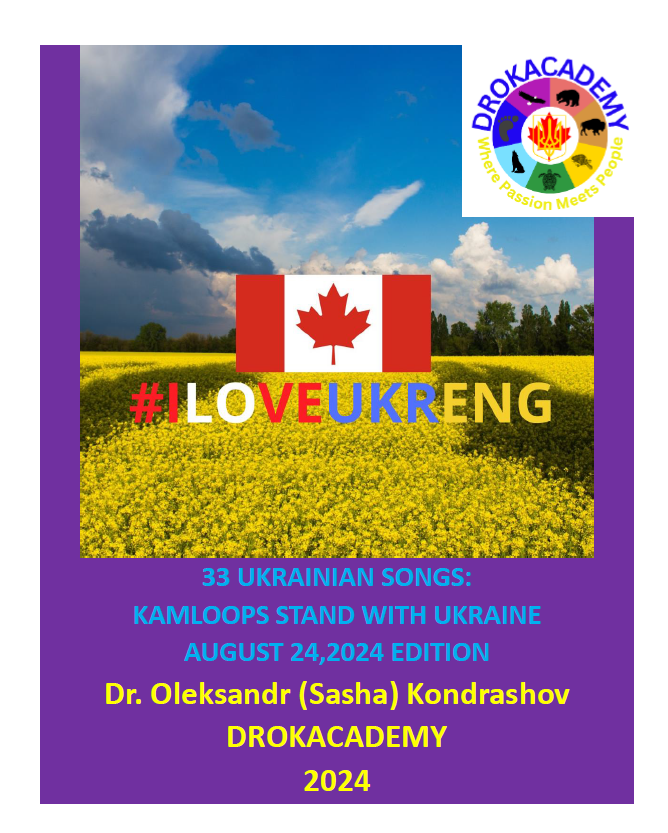
“33 Ukrainian Songs: Kamloops Stands with Ukraine” is a unique and deeply meaningful collection that intertwines music, culture, and solidarity. Authored by Dr. Oleksandr (Sasha) Kondrashov, this volume offers much more than just a musical journey through Ukraine’s history. It is a potent resource that can inspire social workers in Canada and globally by highlighting the role of cultural preservation, community engagement, and advocacy in times of russian aggression in Ukraine. The book serves as a testament to the power of collective action, making it an invaluable tool for the social work community worldwide.
1. Real-World Applications of Social Work Principles
This collection is rich with examples that social workers can use to connect theory with practice. One striking illustration is the sustained community action in Kamloops, where people have gathered for 130 consecutive Saturdays to sing these Ukrainian songs in solidarity. This ongoing commitment mirrors the persistence and resilience that social workers encourage in their communities. The Kamloops movement not only kept Ukraine in the public consciousness but also provided a model of how to maintain momentum in long-term advocacy efforts. For social workers, this example highlights the importance of consistency in community engagement and advocacy.
2. Embracing Cultural Humility in Social Work Practice
“33 Ukrainian Songs” emphasizes the importance of cultural humility—a key approach in social work that involves respecting and learning from the cultural experiences of others. The book introduces readers to Ukraine’s rich musical heritage, encouraging them to explore and understand the deep cultural significance behind each song. For instance, the song “Shche ne vmerla Ukrayiny” (Ukraine Has Not Yet Perished), which serves as the Ukrainian national anthem, carries a history of resilience and hope that resonates with the country’s ongoing struggle for freedom. By engaging with this collection, social workers can practice cultural humility by immersing themselves in the cultural context of those they support, thereby enhancing their ability to connect with and advocate for diverse communities.
3. Inspiration for Grassroots Activism and Community Engagement
This book is a powerful source of inspiration for grassroots activism. The Kamloops Stand with Ukraine movement, documented in the book, is a prime example of how grassroots efforts can grow into powerful symbols of solidarity and resistance. Participants in Kamloops didn’t just stand; they sang songs like “Oi u luzi chervona kalyna” (Oh, in the Meadow a Red Kalyna), a patriotic anthem that has become a modern symbol of Ukrainian resilience. For social workers, this example underscores the importance of grassroots activism in mobilizing communities around a common cause and demonstrates how cultural activities, like group singing, can serve as effective tools for community engagement.
4. Practical Guidance for Organizing and Supporting Community Initiatives
The book provides practical examples of how to organize and sustain community initiatives. The Kamloops group’s consistent weekly gatherings, despite the challenges of “war fatigue” and shifting public interest, highlight the importance of perseverance in social work practice. Their use of music to maintain solidarity and awareness offers social workers a creative approach to organizing community initiatives. By incorporating music and cultural expression into their strategies, social workers can foster a sense of unity and purpose within their communities.
5. Strengthening Advocacy Skills and Raising Awareness
Advocacy is a central theme in “33 Ukrainian Songs,” with the Kamloops movement serving as a clear example of how consistent public presence and cultural expression can raise awareness about global issues. The use of songs like “Brattya Ukrayintsi” (Ukrainian Brothers), which speaks directly to the spirit of resistance and unity, shows how music can be a powerful tool in advocacy. Social workers can draw on this example to strengthen their advocacy skills, using cultural expressions to engage the public and sustain awareness of critical social issues.
6. Learning History, Understanding Struggles, and Embracing Values and Traditions
“33 Ukrainian Songs” provides a window into the rich history, struggles, and values of the Ukrainian people, making it an invaluable resource for social workers. Songs like “1944,” which recounts the tragic deportation of Crimean Tatars, and “Ne Spy, Moya Ridna Zemlya” (Don’t Sleep, My Motherland), a call for vigilance and resilience, help listeners understand the deep-rooted struggles that have shaped Ukraine’s national identity. These songs convey not only historical events but also the values and traditions that have sustained the Ukrainian people through centuries of adversity. For social workers, understanding these aspects of a culture is crucial for providing empathetic and effective support to individuals and communities, especially those affected by conflict and displacement.
7. Building Resilience and Solidarity in Social Work Practice
The stories and songs in this book emphasize the importance of building resilience and solidarity within communities. The song “Ne Spy, Moya Ridna Zemlya” (Don’t Sleep, My Motherland) serves as a call to action, reminding Ukrainians and their supporters of the ongoing need for vigilance and unity. For social workers, this song and others like it illustrate the power of cultural expression in building collective resilience. By integrating music and cultural traditions into their work, social workers can help communities maintain their strength and solidarity, even in the face of prolonged adversity.
8. Global Relevance and Opportunities for International Collaboration
While the book focuses on the Kamloops community, its lessons are globally relevant. Songs such as “Shche ne vmerla Ukrayiny” (Ukraine Has Not Yet Perished) and “Chervona Ruta” (The Red Rue), which symbolize Ukraine’s enduring spirit, demonstrate how local cultural expressions can resonate on a global scale. Social workers around the world can use these songs as a starting point for international collaboration, drawing parallels between Ukraine’s struggle and other global issues. This approach not only fosters a sense of global solidarity but also provides opportunities for cross-cultural learning and cooperation.
9. Promoting Social Justice and Global Citizenship
At its core, “33 Ukrainian Songs” is a call to action for the global community to support Ukraine and stand up for social justice. The book highlights how the collective efforts of communities like Kamloops can have a significant impact on global issues. For social workers, this serves as a reminder of their role as global citizens, responsible for advocating for social justice and supporting vulnerable populations worldwide. The songs in this collection, especially those that emphasize themes of resistance and solidarity, can inspire social workers to deepen their commitment to social justice and global citizenship.
Conclusion
“33 Ukrainian Songs: Kamloops Stands with Ukraine” is an essential resource for the social work community in Canada and beyond. It offers practical examples, inspiration, and guidance for applying social work principles in response to global crises. By engaging with this volume, social workers can enhance their practice, strengthen their advocacy and community engagement skills, and contribute to building more resilient and inclusive communities. This book is not only a powerful tool for education but also a reminder of the impact that social workers can have when they come together in support of a just cause.