
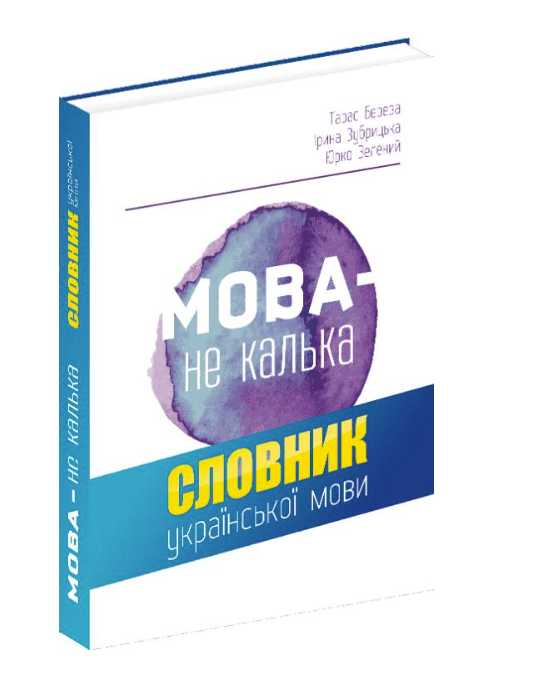

Learning and Preserving Ukrainian in the Diaspora: Highlighting “Мова – не калька“
By Dr. Oleksandr (Sasha) Kondrashov
Introduction
Learning and preserving the Ukrainian language within the diaspora is not merely an academic exercise; it is a vital cultural endeavour that connects us to our roots and sustains our heritage. The evolution of Ukrainian, influenced by russian, English, Polish, and other languages, showcases the dynamic nature of our linguistic heritage. Yet, it is essential to distinguish between natural linguistic evolution and the unintentional degradation of the Ukrainian language through excessive borrowing and calques.
This comprehensive analysis draws upon the insights from the Ukrainian dictionary “Мова – не калька” (Language is Not a Calque), published by T. Bereza, I. Zubrytska, and Yu. Zelenyi. The dictionary represents the authors’ interpretations of the most appropriate and authentic version of Ukrainian, emphasizing the importance of using Ukrainian words over foreign borrowings. It is one of many dictionaries we will be using in the Ukrainian Diaspora Language course to explore and discuss various approaches to enriching and preserving the Ukrainian language.
The Richness and Uniqueness of the Ukrainian Language
The Ukrainian language is one of the richest in the world, with a vast array of expressions, idioms, and proverbs that capture the essence of Ukrainian life and philosophy. Ukrainian language’s soul is deeply embedded in Ukrainian proverbs, sayings, idioms, folk songs, fables, and humorous stories. These elements vividly reflect the essence and spirit of the language, painting a unique picture of Ukrainian morality, customs, and traditions.
Despite centuries of repression and bans against the Ukrainian language, our ancestors left us an invaluable treasure—its unspoiled beauty. Merely for the desire to speak their native language, oppressive regimes executed, killed, and imprisoned Ukrainians. This approach is still evident today, as many people of Ukraine are defending their land and language during russian full-scale invasion.
The Importance of Ukrainian Words
In the Ukrainian diaspora, embracing Ukrainian words instead of relying on English, russian, Polish, and other foreign borrowings is crucial for several reasons:
1. Cultural Identity: Language is a core component of cultural identity. By using Ukrainian words, we reinforce our unique cultural heritage and assert our identity as Ukrainians, no matter where we reside.
2. Historical Continuity: Preserving the Ukrainian language connects us to our history and our ancestors’ struggles to keep the language alive. Throughout history, Ukrainian speakers have faced repression and attempts to erase their language, culture, families and stories. By learning Ukrainian language and recognizing its diverse variations, we honour Ukrainian ancestors, their resilience and their sacrifices.
3. Linguistic Richness: Learning and using authentic Ukrainian expressions enriches our communication and helps keep the language vibrant and diverse. Calques, bureaucratic terms, russisms, Anglicisms, slang, jargon, and obscenities were required for the survival of the people of Ukraine and need to be studied while finding ways to bring back unique Ukrainian words for future generations to practice. Alongside external threats to the Ukrainian language, it is important to strengthen the ability of the people of Ukraine and communities who stand with Ukraine to learn Ukrainian, which is unique to the land of Ukrainian diaspora ancestors.
4. Resisting Assimilation: In multicultural settings, the risk of linguistic assimilation is high. By consciously choosing to use authentic Ukrainian words, the diaspora can resist the dilution of their language and maintain its distinctiveness against dominant languages like English or russian.
Reconnecting with Ancestry
For those who have lost the language or primarily speak the language of Ukraine’s colonizers, learning Ukrainian can be a profound way to reconnect with their ancestry. Even if one does not know any Ukrainian words but has some connection to Ukraine, each new word learned strengthens this ancestral bond:
1. Restoring Ancestral Connection: Learning Ukrainian can serve as a bridge to one’s heritage, allowing individuals to connect with their ancestors on a deeper level. Every word learned and spoken in Ukrainian acts as a step toward reclaiming and honouring one’s roots.
2. Healing Historical Disruptions: The history of colonization and repression has disrupted many families’ connection to their native language. By learning Ukrainian, individuals can begin to heal these historical wounds, restoring a sense of continuity and belonging.
3. Cultural Revival: For many, learning Ukrainian is not just about language acquisition but also about cultural revival. It involves understanding and participating in Ukrainian traditions, customs, and values, thus keeping the culture alive and vibrant within their families and communities.
The Role of the Diaspora in Language Preservation
The diaspora has historically played a significant role in preserving the Ukrainian language. During periods of repression in Ukraine, Ukrainian communities abroad became custodians of linguistic and cultural traditions. This historical role continues to be relevant today:
1. Cultural Guardianship: Ukrainian communities abroad often become centers of cultural preservation, where language, traditions, and customs are maintained and passed down to younger generations.
2. Educational Efforts: Schools, cultural organizations, and community groups within the diaspora often prioritize Ukrainian language education, ensuring that children and newcomers can learn and appreciate their linguistic heritage.
3. Advocacy and Support: Diaspora communities can advocate for the use of Ukrainian in public life, media, and official settings, both in their host countries and back in Ukraine. This support can help bolster efforts to protect and promote the Ukrainian language globally.
The Challenges and Solutions
The tragedy of today’s linguistic reality is that the extraordinarily rich Ukrainian language remains largely unused, while in active use, we have a limited vocabulary of about 1500-2000 words for everyday communication. Every day, we lose the genuine richness of our language, its beauty, uniqueness, and cultural coloration.
In the linguistic field, the state should play a significant role. However, over the years of independence, the state has failed to develop an effective language policy to protect the linguistic rights of Ukrainians. Purely professional discussions and debates in narrow professional and scientific circles will not remedy the current state of affairs. The Ukrainian language in all its diversity needs to be brought to the broadest segments of society by all possible means.
Encouraging Decolonization through Language
In the Ukrainian Diaspora Language course, we will explore the use of multiple dictionaries, including “Мова – не калька,” to discuss the authors’ suggestions on Ukrainian Indigenous versions of words. Understanding and applying these suggestions is crucial for decolonizing the Ukrainian language and learning alternatives to dominant discourses.
It is important to keep the knowledge of colonization and remember history while learning new ways of expressing ourselves in Ukrainian. The goal is to encourage learners to explore and adopt versions of Ukrainian that reflect its rich, indigenous heritage, helping to decolonize the language and promote its unique identity.
Ultimately, it is up to the reader to decide which version of a word they will use. Our objective is to provide the tools and knowledge necessary to make informed choices that honour the Ukrainian language’s history and resilience.
Conclusion
The dictionary “Мова – не калька,” along with other linguistic resources, is a testament to the importance of linguistic purity and the richness of the Ukrainian language. By learning and using authentic Ukrainian expressions, the diaspora can play a pivotal role in preserving and promoting the language. This effort not only honours Ukrainian heritage and history but also ensures that the beauty and uniqueness of the Ukrainian language continue to thrive for future generations.
The preservation and promotion of the Ukrainian language in the diaspora is crucial for maintaining Ukrainian global cultural identity, honouring Ukrainian ancestral history, enriching communication, and resisting linguistic assimilation. Additionally, for those who have lost their connection to the language or primarily speak the language of Ukraine’s colonizers, learning Ukrainian is a powerful way to restore and strengthen their ancestral bonds. Each word learned enriches one’s connection to one’s heritage, ensuring that the rich linguistic legacy of the Ukrainian language remains vibrant and treasured for generations to come.
Reference
Береза, Т., Зубрицька, І., & Зелений, Ю. (2015). Мова – не калька: Словник української мови. Апріорі. Retrieved from https://files.znu.edu.ua/files/Bibliobooks/Inshi60/0044411.pdf