

Dear Social Work Students and Colleagues:
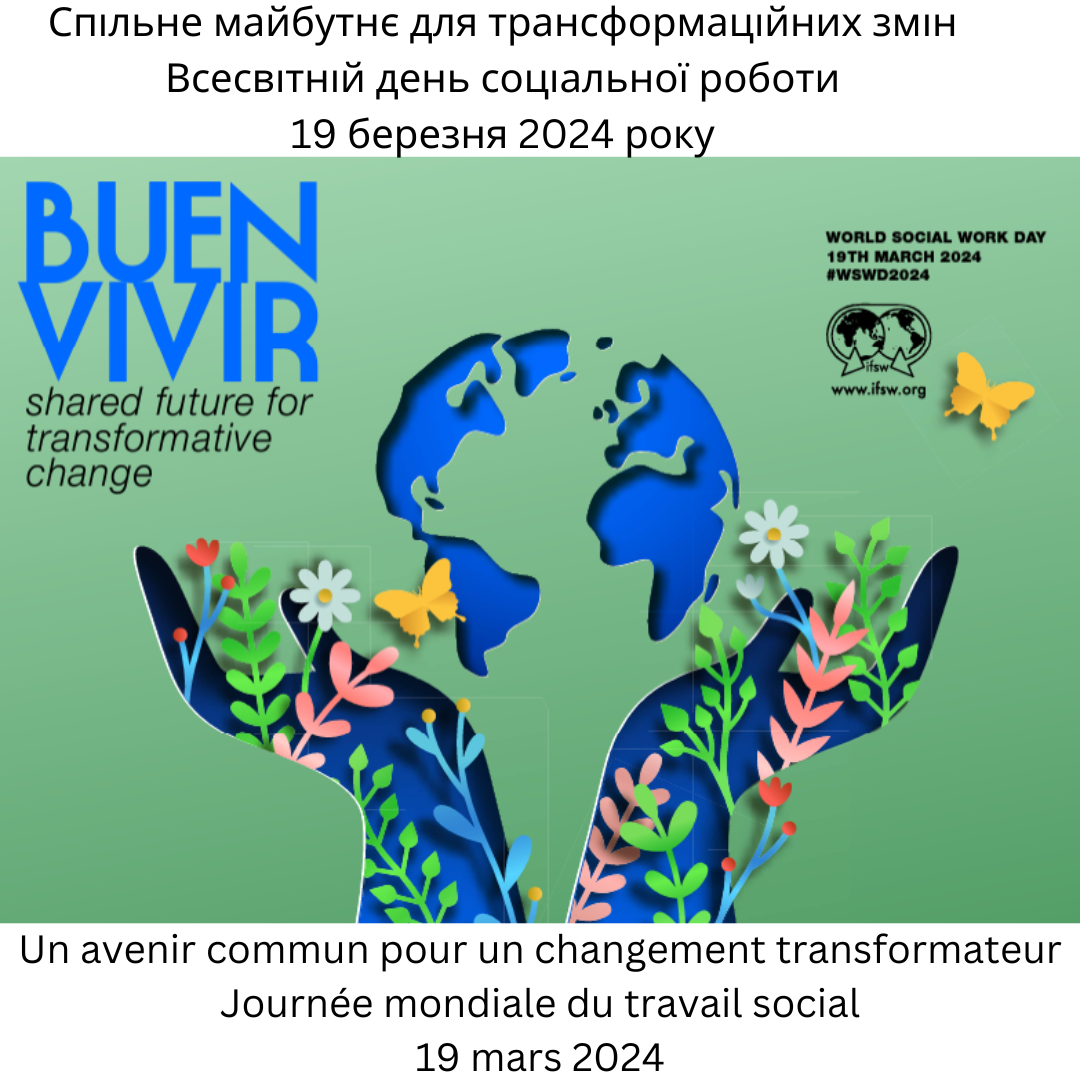
As we embark on a new chapter in the global social work agenda for 2024-2026, I would like to draw your attention to the concept of “Buen Vivir” (“Good Life” or “Sumak Kawsay”), which has been chosen as the guiding theme for the coming years. This concept, rooted in the knowledge and practices of indigenous peoples, offers a transformative approach to social work and social development.
Thank you Tetyana Semigina for sharing the history of the day: “Today, March 19, we celebrate the day of our profession (World Social Work Day). A profession that stands guard over humanity, justice, and strives to solve the most acute social issues. Since 1983, when the International Association of Schools of Social Work (IASSW) – Iassw-aiets, together with the International Federation of Social Workers – IFSW International Federation of Social Workers, first celebrated this day, we unite every year to recognize our important mission – drawing the attention of the authorities and society to the problems of social insecurity, sharing experience, and developing the social sphere”
Buen Vivir is a holistic concept that emphasizes the interconnectedness of all living beings and the importance of living in harmony with nature. It challenges the dominant paradigms of individualism, consumerism, privilege, oppression, and extractivism, and instead promotes a vision of collective well-being, sustainability, anti-privilege, anti-oppression and social justice.
As social workers, we have a unique opportunity to integrate the principles of Buen Vivir into our practice, research, education and advocacy. This means embracing an ecosocial approach that recognizes the interdependence of social and ecological systems, and working towards transformative change at both the micro and macro levels.
At the micro level, we can draw on the knowledge and practices of indigenous peoples to develop culturally responsive and community-based interventions that promote the well-being of individuals, families, and communities. This may involve incorporating traditional healing practices, fostering intergenerational relationships, and supporting the revitalization of indigenous languages and cultures.
At the macro level, we must engage in political social work to challenge the structural inequalities and power imbalances that perpetuate poverty, marginalization, and environmental degradation. This may involve advocating for policies that prioritize social and ecological justice, building alliances with social movements and civil society organizations, and promoting the participation of marginalized communities in decision-making processes.
The adoption of Buen Vivir as the global social work agenda for 2024-2026 represents a significant shift towards a more radical and transformative vision of social work. It challenges us to rethink our assumptions, values, and practices, and to work towards a shared future that is grounded in the principles of solidarity, reciprocity, and respect for all living beings.
As we move forward with this agenda, let us embrace the opportunities and challenges that lie ahead, and work together to build a more just, sustainable, and equitable world for all.
With respect
Dr. Oleksandr (Sasha) Kondrashov
IASSW-AIETS Lifetime Member (Ukraine)
IFSW Lifetime Member (Canada)