
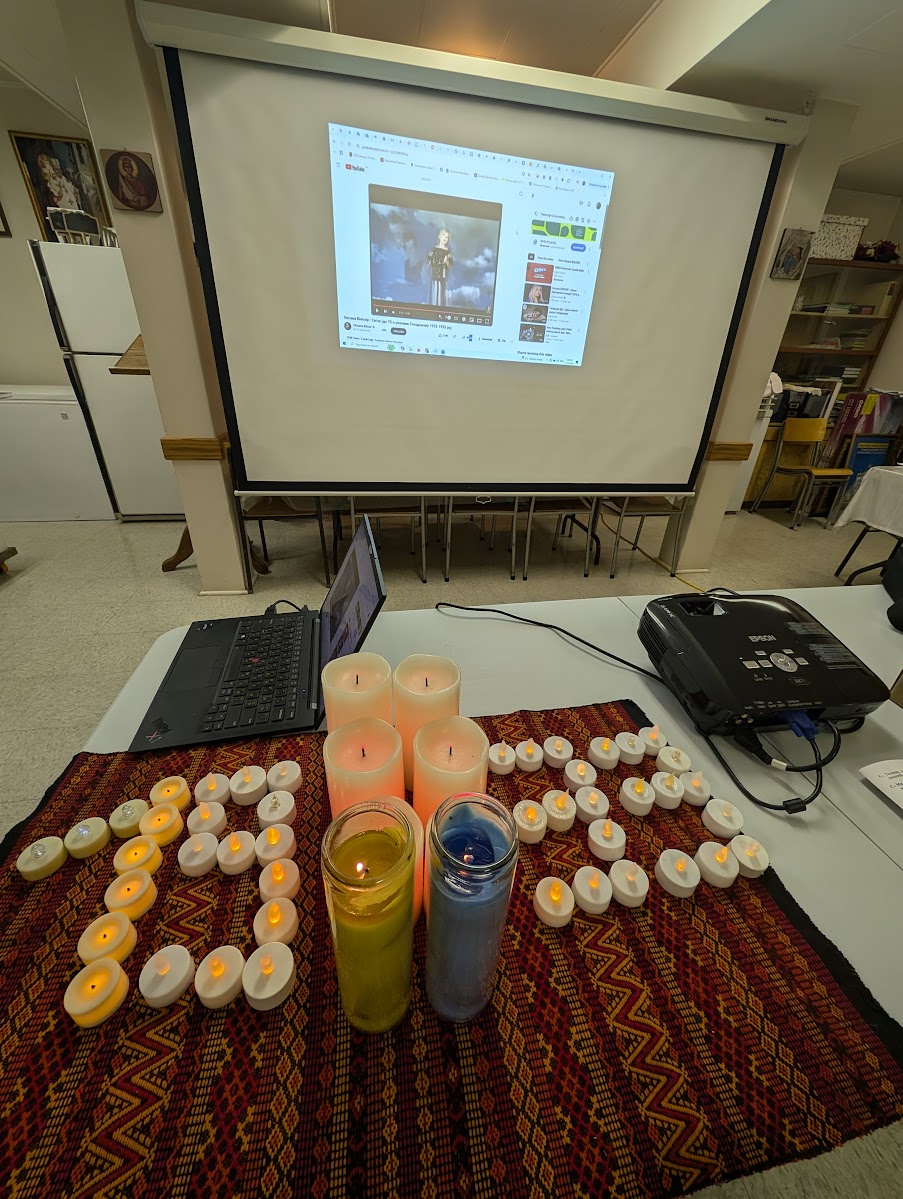

Sasha stood at the front of his Ukrainian Diaspora Language Class, but this day was different. The room was dimly lit, a solemn ambiance set by small, flickering свічки пам’яті (memorial candles) lined up at the front, each one representing a million lives lost in the Holodomor. As students entered, the usual lighthearted atmosphere was replaced with quiet reflection.
“Today’s lesson is special,” Sasha began, his voice gentle but steady. “This Saturday, the fourth in November, is Holodomor Memorial Day, when we remember a tragedy that impacted nearly every Ukrainian family, including many of our own ancestors.”
Olivia, one of the younger students, raised her hand. “I’ve heard stories from my бабуся (grandmother), but I don’t know many words for talking about it in Ukrainian.”
“Then let’s learn together,” Sasha said, looking around the room. “The Holodomor was a famine created by Soviet policies in 1932 and 1933. Millions of Ukrainians died from голод (hunger) because of confiscation policies and unbearable grain quotas.” He gestured toward a map of Ukraine displayed on the wall, indicating the regions most affected by the famine.
The students listened as Sasha explained key words: Голодомор (Holodomor), literally “death by hunger”; свідчення (testimonies), accounts left by survivors; and чорні дошки (black boards), the lists that marked villages for severe restrictions. With each new word, they shared the heavy history it carried.
Yuriy, the oldest student, spoke up. “My parents used to whisper stories about those times. They talked of how everything—wheat, vegetables, even the seed grain—was taken, leaving nothing for families. I remember them saying how entire villages were left with nothing, just like the term розкуркулення (de-kulakization).” His words left a profound silence in the room.
Sasha nodded. “Yes, розкуркулення targeted wealthier peasants who resisted collectivization, and it became one of the harshest policies. Many were labeled куркулі (kulaks), even if they had little. And what’s more painful is that they couldn’t even flee because of the заборона пересування (travel ban) enforced by Soviet authorities.”
Olivia, listening closely, asked, “How do people honor those who died?”
Sasha’s expression softened. “In Ukraine, families light a свічка пам’яті (memorial candle) in their windows to remember the victims. We gather for поминальна служба (memorial services) and offer quiet prayers. Each year, we say ‘Україна пам’ятає’ (Ukraine remembers) and ‘Світ визнає’ (The world recognizes), hoping to keep the memory alive and remind others of this dark chapter in history.”
As they continued, Sasha taught them phrases often heard in survivors’ testimonies: “Не було чого їсти” (There was nothing to eat), “Забирали все” (They took everything), and “Пухли з голоду” (Swollen from hunger). The students repeated each phrase, honoring the memory of those who lived through the unimaginable.
To close the class, Sasha lit a final candle and placed it by the window. “Let’s each say a word or phrase we’ve learned today in remembrance of those who suffered,” he suggested.
The students shared quietly: “пам’ять” (memory), “жертви” (victims), “голод” (hunger), “свідки” (witnesses), their voices soft but resolute.
As they filed out, each student took a candle to light at home on Saturday. Sasha watched them go, reflecting on how important it was to remember. For this small class in Kamloops, the Holodomor was not just a lesson; it was a vow to keep history alive, to remember the tragedy and resilience of their people.