

Draft version
The article draws inspiration from a Facebook post by Oksana Markarova, Ukraine’s Ambassador to the United States. Her post, highlights the recent U.S. legislative initiative, the H.R.5349 Crucial Communism Teaching Act. This Act, authored by Congresswoman Maria Elvira Salazar and supported by a bipartisan coalition, emphasizes the importance of educating the public, especially young Americans, on the dangers of communism and totalitarianism.
Markarova’s post underscores the relevance of this legislation by connecting it to the historical atrocities committed under communist regimes, including the Holodomor, mass deportations, and political repressions. She further highlights how the Act seeks to equip educational institutions with tools to teach about political ideologies that conflict with the core principles of freedom and democracy.
This inspiration forms the backbone of the article’s analysis, weaving together historical insights, contemporary examples, and the critical need for inclusive civic education to combat systemic oppression and authoritarianism. The analysis here is designed as part of a broader effort to develop curriculum content for teaching political ideologies in social work and social development.
Looking forward, this material will be incorporated into teaching modules to help students critically examine the interplay between power, control, and systemic oppression. By connecting these historical lessons to contemporary global issues, the curriculum will equip students with the tools necessary to foster equity, justice, and informed civic engagement.
Verification of the historical and contemporary examples included in this draft remains essential, and further refinement will involve incorporating diverse perspectives and expanding on real-world applications in social work and social development practices.
Introduction
Power and control are central to the governance and societal organization of human civilization. Throughout history, political ideologies have often served as tools to consolidate authority, regulate populations, and sustain hierarchies. While each ideology offers distinct principles and methods, the outcomes frequently converge: exploitation of marginalized populations, resource monopolization, and systemic suppression of dissent. Among the groups most affected are Indigenous communities, whose lives and cultures have been consistently targeted under these systems.
This essay critically examines the destructive mechanisms of communism, colonialism, capitalism, fascism, and other ideological frameworks, with particular attention to their impact on Indigenous and marginalized peoples. It provides historical examples of these dynamics, explores modern manifestations of power and control, and offers educational reform recommendations using the H.R.5349 Crucial Communism Teaching Act as a foundation for meaningful civic education.
Specific Manifestations of Control
Soviet Communism’s Impact
Rooted in Marxist philosophy, communism seeks to establish a classless society through collective ownership of resources. However, in practice, communist regimes have often resorted to authoritarian control to suppress dissent and maintain power. The Soviet Union under Stalin is a prime example, where policies such as forced collectivization and political purges led to the deaths of millions. Indigenous and rural populations, who were disproportionately affected, serve as stark reminders of the ideology’s destructive potential when applied without regard for human rights.
Soviet communism, while ideologically aiming for equality and collective progress, often manifested as a system of centralized control and authoritarianism. Its impacts on Indigenous and local populations were catastrophic.
- Holodomor (1932-1933): A manufactured famine in Ukraine led to the deaths of millions people. Soviet policies forcibly requisitioned grain and restricted aid, targeting Ukrainian peasants as part of a broader strategy to suppress nationalist movements.
- Deportation of Crimean Tatars (1944): Over 200,000 Tatars were forcibly relocated to Central Asia under accusations of collaborating with Nazi forces. Nearly 46% of the deportees died within the first year due to harsh conditions.
- Collectivization in Central Asia: Forced settlement policies resulted in the deaths of 1.5 million Kazakhs, who were stripped of their nomadic way of life, leading to widespread starvation.
Cultural suppression was a hallmark of Soviet policy:
- Language Suppression: Indigenous languages were banned in schools, replaced by mandatory Russian education.
- Cultural Erasure: Siberian shamanic traditions were systematically destroyed.
- Russification Policies: Efforts to homogenize the population undermined Indigenous identities.
Colonial Power Structures
Imperialism and colonialism are perhaps the most directly exploitative ideologies in their treatment of Indigenous peoples. European colonial powers systematically subjugated native populations, stripping them of their land, resources, and cultural identity. For example, the colonization of Africa and the Americas was marked by violence, slavery, and the erasure of Indigenous languages and traditions. The colonial legacy continues to perpetuate inequality, as former colonies struggle with economic dependency and social fragmentation.
Colonialism’s primary function was the extraction of wealth and resources, achieved through the subjugation of Indigenous populations.
- Belgian Congo (1885-1908):
- Under King Leopold II, an estimated 10-15 million people died due to forced labor and brutal punishments, including systematic mutilations for failing to meet rubber quotas.
- Entire villages were destroyed to enforce compliance with resource extraction demands.
- British India:
- The Bengal Famine of 1943, exacerbated by British policies, caused the deaths of 3 million people.
- Exploitation of farmers for indigo and cotton production destabilized local economies and led to poverty and environmental degradation.
- British policies systematically dismantled local industries to favor British exports.
- Spanish Americas:
- The encomienda system enslaved millions of Indigenous people for agricultural and mining labor.
- The Potosí silver mines claimed the lives of 8 million Indigenous workers over centuries.
- Entire civilizations, including the Aztec and Inca empires, were eradicated through conquest and disease.
Modern Capitalism’s Methods
While capitalism is often lauded for promoting innovation and individual freedom, it has also been a vehicle for economic inequality and environmental degradation. Capitalist systems have historically exploited Indigenous labor and resources to benefit the wealthy elite. In the 19th and 20th centuries, the industrialization of the Global North was built on the exploitation of colonies in the Global South, perpetuating cycles of poverty and resource depletion.
While capitalism is often associated with innovation and individual freedom, its global expansion has frequently resulted in exploitation and inequality.
- Amazon Rainforest Exploitation:
- Deforestation has destroyed 17% of the rainforest, impacting over 400 Indigenous tribes.
- Agricultural corporations and illegal miners have engaged in land grabbing, displacing Indigenous communities.
- Mercury contamination from illegal gold mining has poisoned waterways, threatening both health and ecosystems.
- Corporate Neocolonialism:
- Shell’s operations in Ogoniland caused environmental devastation, displacing communities and destroying livelihoods.
- Mining companies across Africa and Latin America have forcibly removed Indigenous people from ancestral lands.
- Biopiracy, patenting of traditional Indigenous knowledge, exemplifies modern exploitation of Indigenous intellectual property.
Fascism and Ethnic Cleansing
Fascism and its variant, Nazism, are ideologies grounded in ultra-nationalism and the glorification of state power. The Holocaust, perpetrated by the Nazi regime, represents the culmination of these ideologies’ inhumane practices. Indigenous and minority groups, including the Romani people and Slavs, were targeted alongside Jews in a systematic campaign of extermination. These ideologies thrive on exclusion, making them among the most violent forms of governance in history.
Fascism and its ideological cousin, Nazism, are marked by aggressive nationalism and systematic exclusion of marginalized groups.
- Nazi Germany:
- The Roma Holocaust resulted in the deaths of 500,000 people.
- Slavic populations were targeted for forced labor and elimination as part of Hitler’s Lebensraum policy.
- The displacement of Eastern Europeans created widespread suffering and loss of life.
- Italian Fascism:
- Italy’s colonization of Libya led to the deaths of over 100,000 Libyans through warfare and concentration camps.
- Chemical warfare during the Ethiopian occupation devastated civilian populations.
- Forced Italianization sought to erase the identities of minority groups under Mussolini’s regime.
Contemporary Russism
Russism, a term used to describe the aggressive nationalism and imperial ambitions of modern Russia, exemplifies how ideologies evolve to justify domination. The ongoing Russian aggression in Ukraine highlights Russism’s reliance on misinformation, militarism, and suppression of dissent to maintain power. Indigenous groups within Russia, such as the Tatars and Siberian tribes, have faced cultural assimilation and marginalization under this ideology.
Modern Russism combines elements of nationalism and imperialism, employing suppression and aggression to maintain power.
- Chechnya:
- Two wars resulted in over 200,000 civilian deaths.
- Political repression and cultural suppression, including restrictions on Chechen language and traditions, are ongoing.
- Indigenous Peoples in Russia:
- Discrimination against 47 recognized Indigenous groups continues.
- Resource extraction in Siberian territories disrupts traditional ways of life.
- Language and education policies undermine cultural preservation.
Modern Manifestations
China’s Policies
China’s authoritarian policies reflect a continuation of historical power dynamics.
- Xinjiang:
- Between 1 and 3 million Uyghurs are detained in re-education camps.
- Forced sterilizations and cultural erasure highlight systematic oppression.
- Tibet:
- Nomadic populations have been displaced in favor of state-controlled settlements.
- Religious persecution targets Buddhist practices central to Tibetan identity.
Corporate Power Structures
Modern corporations wield significant influence over marginalized populations and natural resources.
- Tech Companies:
- Data colonialism exploits personal information from vulnerable populations.
- Algorithmic biases perpetuate discrimination in hiring and access to services.
- Extractive Industries:
- Mining and oil companies displace Indigenous communities while causing environmental damage.
- Exploitative labor practices often trap workers in cycles of poverty.
The Impact on Indigenous Peoples
Among these ideologies, some have been particularly brutal in their treatment of Indigenous communities. Colonialism, for instance, directly targeted Indigenous lands and cultures, often leading to genocide. Meanwhile, communism and capitalism have utilized Indigenous populations as tools in their broader agendas, whether through forced collectivization or exploitative labor practices.
The exploitation of Indigenous labor under capitalism can be seen in the rubber industry of the Amazon, where native populations were enslaved to meet global demand. Similarly, under Soviet communism, Indigenous Siberians were forcibly relocated and their cultural practices suppressed in the name of modernization.
The Crucial Communism Teaching Act: A Path to Education and Reform
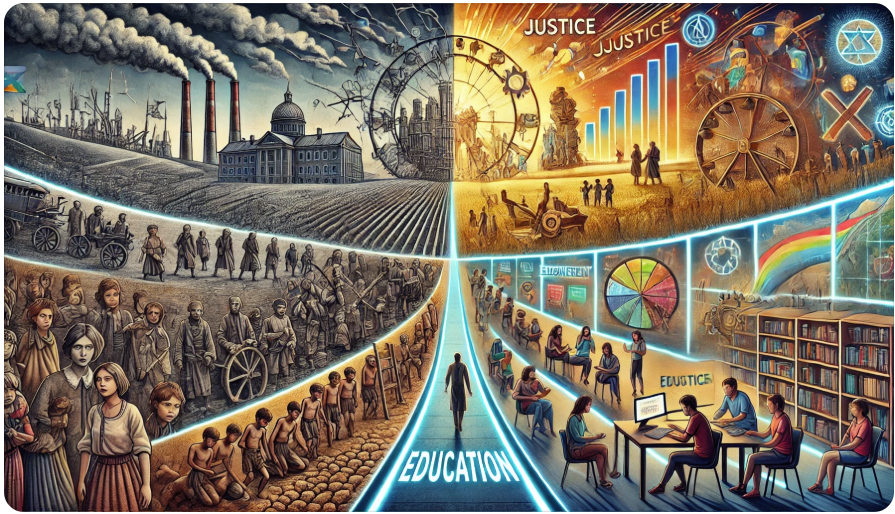
The H.R.5349 Crucial Communism Teaching Act represents an opportunity to educate future generations about the dangers of these ideologies. By developing a civic education curriculum that includes a comparative analysis of political ideologies, the Act aims to foster critical thinking and civic responsibility among students. However, its scope could be expanded to address the following:
- Inclusion of Colonialism and Imperialism
While communism is a central focus of the Act, it is essential to also educate students about the historical and ongoing impacts of colonialism and imperialism. This inclusion would provide a more comprehensive understanding of how power and control operate across ideologies. - Highlighting Indigenous Perspectives
Incorporating Indigenous voices into the curriculum would enrich students’ understanding of how various ideologies have affected marginalized communities. Oral histories from Indigenous peoples who experienced colonization, collectivization, or exploitation could serve as powerful teaching tools. - Promoting Equity and Justice
The curriculum should not only critique oppressive systems but also highlight pathways to equity and justice. Examples of successful Indigenous resistance and advocacy can inspire students to envision a fairer world.
Educational Reform Recommendations
The H.R.5349 Crucial Communism Teaching Act can serve as a platform to promote critical analysis of all systems of oppression. The following reforms could enhance its impact:
- Curriculum Expansion:
- Introduce frameworks for comparing multiple ideologies.
- Use case studies to connect historical patterns with contemporary challenges.
- Indigenous Perspective Integration:
- Ensure Indigenous voices are central to discussions on historical and modern exploitation.
- Recognize the value of traditional knowledge in addressing systemic inequalities.
- Teaching Methodologies:
- Use interactive learning tools and survivor testimonies to engage students.
- Promote community engagement through field studies and expert consultations.
- Assessment Frameworks:
- Focus on developing critical analysis skills and real-world problem-solving abilities.
Legislative Enhancement Recommendations
To improve the scope and effectiveness of H.R.5349:
- Expanding the Curriculum
The curriculum should address a broader range of ideologies, including capitalism and colonialism, to ensure a balanced perspective. Comparative case studies, such as the impact of British imperialism in India versus Soviet collectivization in Ukraine, could provide valuable insights. - Engaging Communities
Civic education initiatives should involve community leaders, educators, and students in the development process. This participatory approach would ensure the curriculum reflects diverse experiences and perspectives. - Integrating Experiential Learning
Programs such as internships, community service, and role-playing simulations can make civic education more engaging. For instance, students could participate in mock UN sessions to explore the dynamics of global power and control. - Fostering Global Awareness
By examining contemporary examples of authoritarianism, such as China’s treatment of Uyghurs, students can connect historical lessons to current events. This global perspective would underscore the relevance of civic education in addressing modern challenges.
Conclusion
Political ideologies have consistently relied on power and control, often at the expense of marginalized communities. From historical atrocities like the Holodomor and colonial genocides to modern exploitation by corporations, these systems perpetuate cycles of inequality and oppression. The H.R.5349 Crucial Communism Teaching Act offers an opportunity to educate future generations about these patterns, but its success hinges on a comprehensive, inclusive approach. By integrating diverse perspectives, historical insights, and critical thinking tools, civic education can empower individuals to challenge oppressive systems and work toward a more equitable world.
H.R.5349 – Crucial Communism Teaching Act
References
All claims and data in this study require verification through primary sources, including:
· Historical Sources:
- Records and reports detailing the Holodomor, the deportation of Crimean Tatars, and the effects of Soviet collectivization.
- Documentation of colonial practices in the Belgian Congo, British India, and Spanish Americas.
· Primary Accounts:
- Eyewitness testimonies from survivors of systemic oppression under different ideologies, including Indigenous perspectives.
· Expert Analyses:
- Scholarly studies on the role of ideology in perpetuating inequality and authoritarianism.
- Economic analyses of resource exploitation and labor systems tied to global capitalist practices.
· Legislative Texts:
- H.R.5349 Crucial Communism Teaching Act: Details and proposed reforms to enhance civic education.
· Contemporary Reports:
- Studies on modern corporate practices, environmental degradation, and human rights abuses tied to political and economic systems.
Notes
Verification of these events is crucial to understanding the broader implications.