

Sasha couldn’t wait for the next Ukrainian Diaspora Language Class. The previous week’s lesson on different words for “mouth” had sparked such enthusiasm that he decided to dive deeper into the topic. This time, he’d focus on idioms related to the mouth and speech.
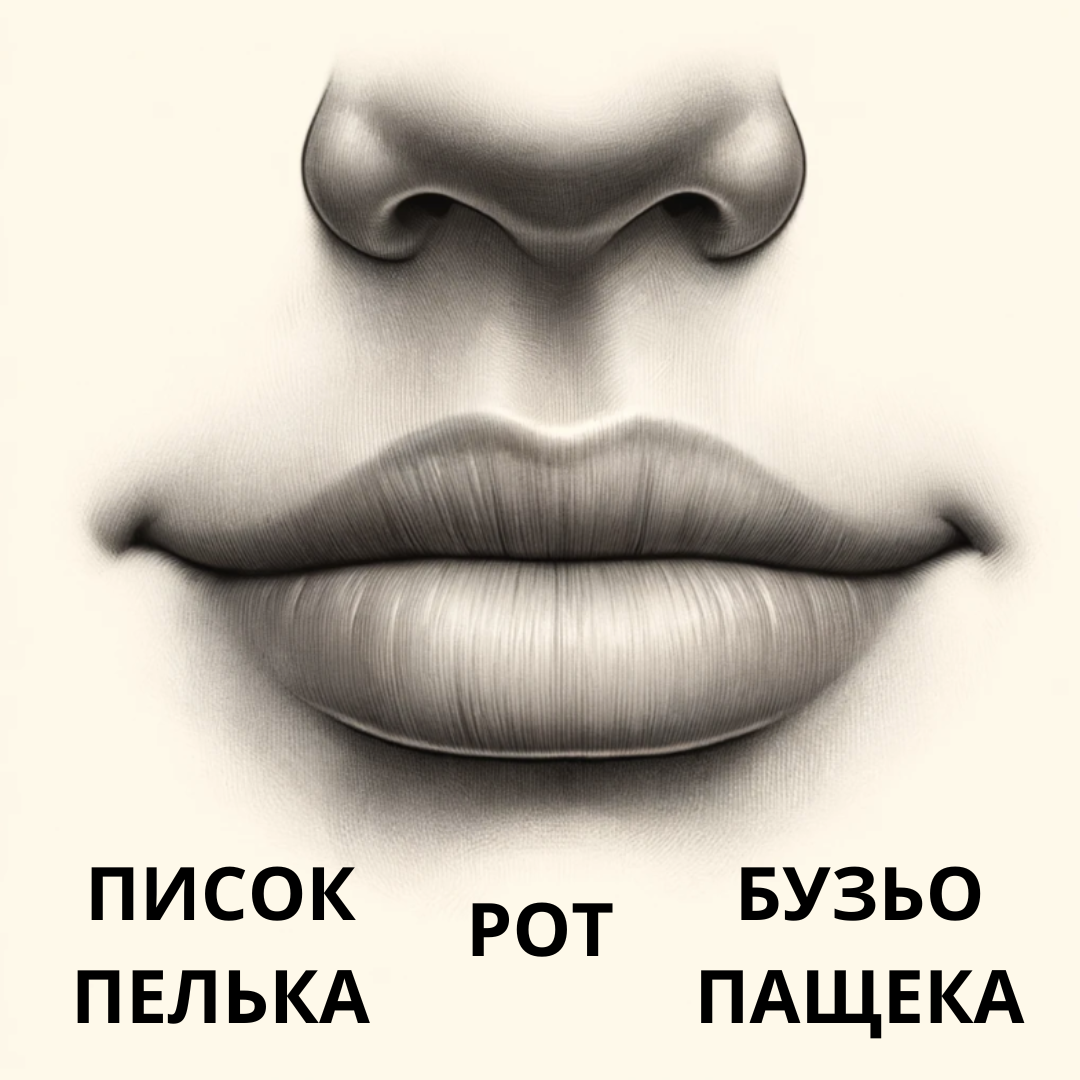
As the students filed in, chattering excitedly, Sasha greeted them with a mischievous grin. “Last week, we learned about ‘рот’, ‘писок’, and ‘пелька’. But guess what? Thanks to my colleague Zoryana and the wonders of Facebook, we’ve got two more words to add to our collection: ‘пащека’ and ‘бузьо’!”
The class erupted in a mix of laughter and confused murmurs. Olivia, the second-generation Ukrainian-Canadian, raised her hand. “Wow, that’s five words for ‘mouth’ now! How do we know which one to use?”
Sasha chuckled. “Great question, Olivia! Each word has its own flavor and context. ‘Пащека’ often refers to a large mouth or maw, sometimes used humorously. ‘Бузьо’ is more regional, often heard in Western Ukraine. It’s a great reminder of how rich and diverse our language is!” Рот is the most common word to describe mouth in Ukrainian.
After letting the new words sink in, Sasha clapped his hands together. “Now, let’s put all these mouths to work with some colorful Ukrainian idioms!”
Olivia was quick to contribute. “Oh, I know one! My бабуся always says ‘Тримай язик за зубами’ when she wants me to keep a secret.”
Sasha’s eyes lit up. “Прекрасно! That’s perfect, Olivia. ‘Тримай язик за зубами’ literally means ‘keep your tongue behind your teeth’. In English, you might say ‘keep your mouth shut’ or ‘hold your tongue’. Any others?”
Yuriy, the older gentleman, chuckled and said, “How about ‘Набрати води в рот’? My wife says that to me when she wants me to be quiet during her favorite TV show.”
The class erupted in laughter as Sasha explained, “Yes, ‘Набрати води в рот’ literally means ‘to take water in your mouth’. It’s similar to the English phrase ‘to button your lip’.”
As the lesson progressed, the classroom buzzed with energy as students shared and learned new idioms:
- “Прикусити язика” (Prykusyty yazyka) – “To bite one’s tongue”
- “Язик свербить” (Yazyk sverbyt) – “One’s tongue is itching” (eager to speak)
- “Піна з рота йде” (Pina z rota yde) – “Foam is coming from the mouth” (to be extremely angry)
Towards the end of the class, Sasha decided to challenge his students. “Okay, who can tell me what ‘Розжувати і в рот покласти’ means?”
The room fell silent until Olivia’s face lit up. “Oh! My mom uses this when she’s exasperated with explaining something. It’s like… to explain something so thoroughly that you’re practically putting it in someone’s mouth, right?”
Sasha beamed with pride. “Exactly! In English, you might say ‘to spoon-feed information’. It’s used when you have to explain something very clearly, almost excessively.”
As the class wound down, Sasha looked around the room, heart swelling with joy. “You see, my friends, these words and idioms are more than just phrases. They’re windows into our culture, our humor, our way of thinking. From ‘рот’ to ‘пелька’, from ‘пащека’ to ‘бузьо’, each word tells a story of our diverse linguistic landscape. When you use them, you’re not just speaking Ukrainian; you’re keeping our heritage alive.”
The students nodded, their connection to their roots growing stronger with each colorful phrase they learned. As they left the classroom, excitedly practicing their new words and idioms, Sasha couldn’t help but smile. He knew that these expressions would do more than just improve their language skills – they would bridge generations and continents, uniting Ukrainians through the power of words.
“До побачення!” Sasha called out as the last student left. “And remember, ‘Слово не горобець – вилетить, не впіймаєш!’ (‘A word is not a sparrow – once it flies out, you can’t catch it!’)”
The sound of laughter echoed down the hallway, a testament to the joy of language and the unbreakable bonds of cultural heritage. Sasha made a mental note to thank Zoryana for her contribution, realizing once again how the collective knowledge of the People of Ukraine and Ukrainian diaspora continued to enrich their shared linguistic journey.
Leave a Reply