
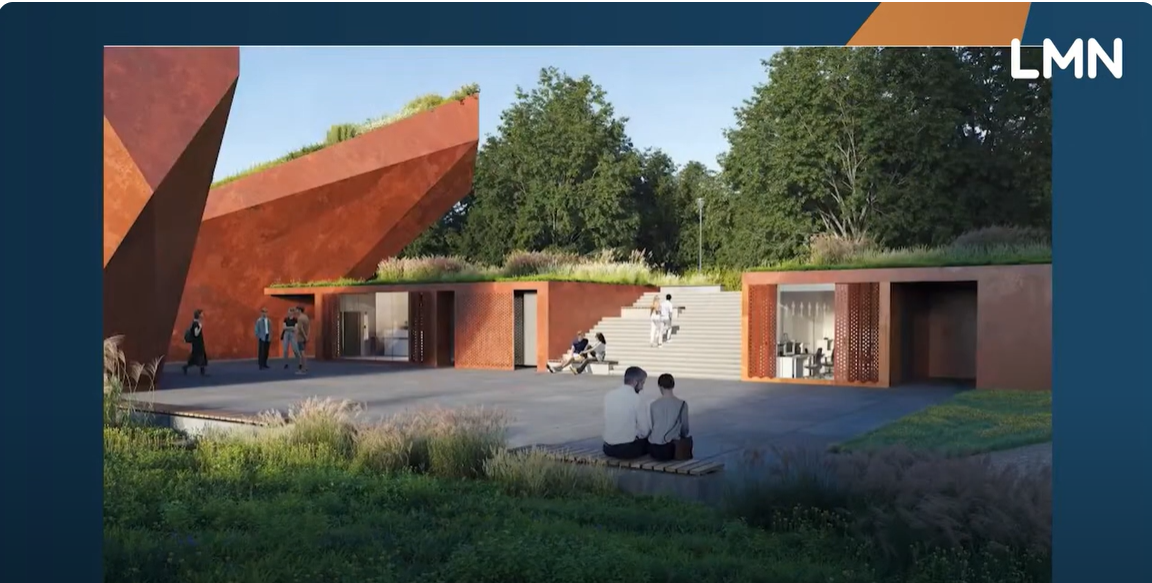

In the heart of Lviv, Ukraine, a controversy surrounding a military memorial has ignited a powerful discussion about civic engagement, democratic processes, and the delicate balance between public policy and personal grief. At the center of this debate stands Ivanka Krypiakevych-Dymyd, mother of fallen hero Artem Dymyd, whose story exemplifies the crucial role of civic action in shaping public spaces and policies.
The Hero’s Story
Artem Dymyd gave his life defending Ukraine against russian aggression on June 18, 2022, at the age of 27 (to read more about Artem check the post on my academic blog: https://krasun.ca/2022/06/19/rest-in-peace-artemko/). A passionate advocate for Ukraine’s freedom, Artem had been involved in the Revolution of Dignity in 2014 before joining the Armed Forces to defend his country against the russian invasion. For Ivanka, the pain of this loss has been compounded by a recent decision regarding the design of a memorial at Lviv’s Marsove Pole (Field of Mars), where approximately 800 Heroes of the russo-Ukrainian war are buried (Kostyk, 2024).
The Memorial Controversy
The Lviv City Council, led by Mayor Andriy Sadovyi, conducted an architectural competition for the memorial’s design. The winning project, selected from 27 entries, was created by Victor Golubev and Dmytro Raifshneider from Khmelnytskyi. According to the city council, the project includes plans for a burial zone, square, museum, monument to the unknown soldier, chapel, and columbarium. The design incorporates Cossack crosses made of white stone for each grave, with space for photos, names, and dates of the fallen (Масюк, 2024).
While the city government hails the winning project as innovative and inclusive, Ivanka and many others have raised serious concerns about the design, the selection process, and the lack of meaningful consultation with the families of the fallen.
Ivanka’s Critique and Call to Action
In a poignant Facebook post, Ivanka expressed her disappointment. Here is the translated verion of the post from July 30th: “Yesterday I was at Marsovo.
What can I tell you guys?
The war should be ended at least to re-elect the mayor of Lviv (it turns out that he will be mayor as long as the war continues, because elections are not held during hostilities)
Yesterday I was in Marsovo.
They hung up the ‘winning project’ of a competition that you and I did not see (the competition, that is).
There is that crappy EXPLOSION of rusty metal, which you cannot understand, because it (oh the depth of creative imagination!!!) points to Donetsk with one side and Luhansk and Kherson with the other side!!!!
My son, Artemiy, was killed by a mortar explosion and his friend, a historian, was torn to pieces, and his father collected his son in pieces in a black bag.
Every time my family goes to Marsove, we will not see the Maestat of Peace, Honour and Glory, but this pile of iron, which symbolises someone’s stupidity.
That is why I decided to move Artem’s body to the burial place of the Plast Heroes in Lychakiv.
Yes, it will be a scandal.
Yes, I don’t want it.
But.
I was on Marsovo yesterday. ” (Dymyd, July 30, 2024).
Here’s a translation of Ivanka Dymyd’s Facebook post from April 22, 2024:
Attention!
I ask my friends to help me prepare for the meeting on Wednesday at the city council regarding the project at Marsove.
I believe:
The project is bad
Concrete is a dead material, and our soldiers are alive and burning with love
The project lacks warmth, lacks thought, lacks soul
There should be a public competition in 3 stages, not presenting Lviv residents with a fait accompli. I feel deceived.
I don’t know any person from the competent commission. This is strange.
See 1
Please, write a few words.
Thank you!
Mykhailo’s opinion: Now Marsove field looks like a single powerful monument with separate very individual graves. This is good.
Mykhailo Dymyd
Ivanka’s critique goes beyond aesthetics. She raises important questions about democratic processes, financial transparency, and the fundamental purpose of memorials. Her concerns, echoed by many in the community (Kostyk, 2024; Львівська Мануфактура Новин, 2024), include:
- The placement of the monument to the unknown soldier, which is not centrally located.
- The use of concrete as the primary material, which some feel lacks warmth and symbolism.
- The inclusion of a large green zone, which some argue could be used for future burials.
- The design of the chapel, which has been criticized for its unusual shape.
- The lack of adequate consultation with families of the fallen heroes.
Ivanka’s advocacy has sparked a broader debate in Lviv and across Ukraine about how societies should honor their fallen heroes and involve citizens in decision-making processes.
The Importance of Civic Action in Democratic Societies
Ivanka’s story underscores several key reasons why civic action is critical in democratic societies:
- Checks and Balances: Active citizen participation serves as a crucial check on government power, ensuring that public officials remain accountable to the people they serve.
- Diverse Perspectives: Civic engagement brings a variety of viewpoints to the table, leading to more comprehensive and representative decision-making.
- Community Ownership: When citizens are involved in shaping public spaces and policies, they develop a stronger sense of ownership and connection to their community.
- Preservation of Democratic Values: Regular civic participation helps maintain and strengthen democratic norms and institutions, even in times of crisis.
- Addressing Gaps: Citizens often identify and address issues that may be overlooked by official channels, ensuring that important concerns are not neglected.
- Emotional and Cultural Significance: In cases like memorial design, civic action ensures that the deep emotional and cultural significance of such spaces is fully considered.
The Importance of Proper Memorial Design
The design of memorials, especially those honouring fallen soldiers, is of critical importance for several reasons:
- Collective Memory: Memorials serve as physical manifestations of a society’s collective memory. They help shape how future generations will understand and remember historical events and sacrifices.
- Healing and Closure: For families of the fallen, memorials can provide a place for grieving, remembrance, and finding closure. A well-designed memorial can offer comfort and a sense of peace.
- National Identity: War memorials often become symbols of national identity and pride. They reflect a country’s values and its commitment to honoring those who have made the ultimate sacrifice.
- Education: Memorials can serve as educational tools, helping to convey the realities of war and the importance of peace to future generations.
The Need for Family Consultation
Involving families in the memorial design process is crucial for several reasons:
- Respect for Grief: Families of fallen soldiers are the primary stakeholders in these memorials. Their grief and loss should be respected and considered in the design process.
- Personal Connection: Families can provide insights into the personalities and values of the fallen, helping to create more meaningful and personalized memorials.
- Community Healing: Involving families in the process can contribute to community healing and unity, especially in times of national crisis.
- Avoiding Controversy: As seen in the case of Lviv and other cities, failing to adequately consult families can lead to public outcry and controversy, potentially undermining the memorial’s purpose.
Addressing the Concerns: A Path Forward
To address the concerns raised by Ivanka and others, and to strengthen democratic processes in memorial design and other civic projects, the following steps could be considered:
- Enhanced Public Consultation: Implement a multi-stage consultation process that actively involves families of the fallen, veterans, and the broader community from the early stages of project conception.
- Transparency Measures: Establish clear guidelines for financial transparency in public projects, including detailed budgets and regular public reporting.
- Independent Oversight: Create an independent committee, including representatives from various stakeholder groups, to oversee major public projects and ensure adherence to democratic principles.
- Education and Engagement: Develop programs to educate citizens about their rights and responsibilities in civic processes, encouraging broader participation.
- Flexible Design Processes: Implement more flexible design processes that allow for meaningful adjustments based on public feedback, even after initial selections have been made.
- Regular Town Halls: Host regular town hall meetings where citizens can directly engage with public officials on important community issues.
- Digital Platforms: Utilize digital platforms to broaden participation, allowing citizens to contribute ideas, vote on proposals, and stay informed about project developments.
- Respect for Military Traditions: Ensure that military memorial designs incorporate elements of military tradition and symbolism, respecting the unique nature of military service and sacrifice.
- Balancing Aesthetics and Functionality: Strive for a balance between artistic vision and practical considerations, ensuring that memorials serve their intended purpose while also being visually meaningful.
Conclusion
Ivanka Krypiakevych-Dymyd’s advocacy in the face of personal tragedy serves as a powerful reminder of the importance of civic action in democratic societies. Her story illustrates how engaged citizens can shape public discourse, challenge authority when necessary, and work towards more inclusive and meaningful public spaces.
As Ukraine continues its fight for freedom and democracy, stories like Ivanka’s highlight the parallel struggle to maintain and strengthen democratic processes on the home front. By fostering a culture of active civic engagement, societies can ensure that public projects truly reflect the will and values of the people, honoring the sacrifices of heroes like Artem Dymyd in the most fitting way possible.
The ongoing debate in Lviv offers valuable lessons for communities around the world grappling with questions of memorialization, civic engagement, and democratic governance. It reminds us that a healthy democracy requires not just institutions, but active, engaged citizens willing to stand up for their beliefs and work tirelessly to shape the world around them.
As this situation continues to unfold, it will be crucial for all stakeholders – city officials, architects, families of the fallen, and the broader community – to engage in open, respectful dialogue. Only through such collaborative efforts can a memorial be created that truly honors Ukraine’s heroes while also serving as a symbol of national unity and resilience in the face of aggression.
References:
Dymyd, I. (2024, July 30). [Facebook post]. Facebook. https://www.facebook.com/ivankadym
Kostyk, A. (2024, May 10). Військовий цвинтар у Львові. Що стало предметом суперечки. Твоє Місто. https://www.istpravda.com.ua/articles/2024/05/10/163908/
Kondrashov, O. (2022, June 19). Rest in Peace, Artemko. Krasun. https://krasun.ca/2022/06/19/rest-in-peace-artemko/
Львівська Мануфактура Новин. (2024, April 26). Що не так з Меморіалом Героїв на Марсовому полі | Погляд з Хмарочоса [Video]. YouTube. https://www.youtube.com/watch?v=vdOKz7gAVqg
Масюк, М. (2024, April 17). У Львові обрали найкращий проект Меморіалу Героїв на Марсовому полі. Zaxid.net. https://zaxid.net/u_lvovi_obrali_naykrashhiy_proekt_memorialu_geroyiv_ukrayini_na_marsovomu_poli_n1583810
Leave a Reply